Aviation English: Turn Airline Followers Into Passengers

Aviation English: Turn Airline Followers Into Passengers

Aviation English

Aviation English for Airline Marketing Teams: Turning Followers Into Passengers in 2026

In 2026, an airline’s social media feed is its busiest departure gate, and unclear English can ground your marketing faster than a snowstorm.

Estimated reading time: 7 minutes

Key Takeaways

  • Clear English directly influences purchase decisions for 70% of consumers.
  • Caption writing, empathetic response, and confident speaking are core airline social media skills.
  • NILDS aviation English training 2026 uses real airline case studies and live role-plays.
  • Clear communication is a revenue driver, not just a nice-to-have.

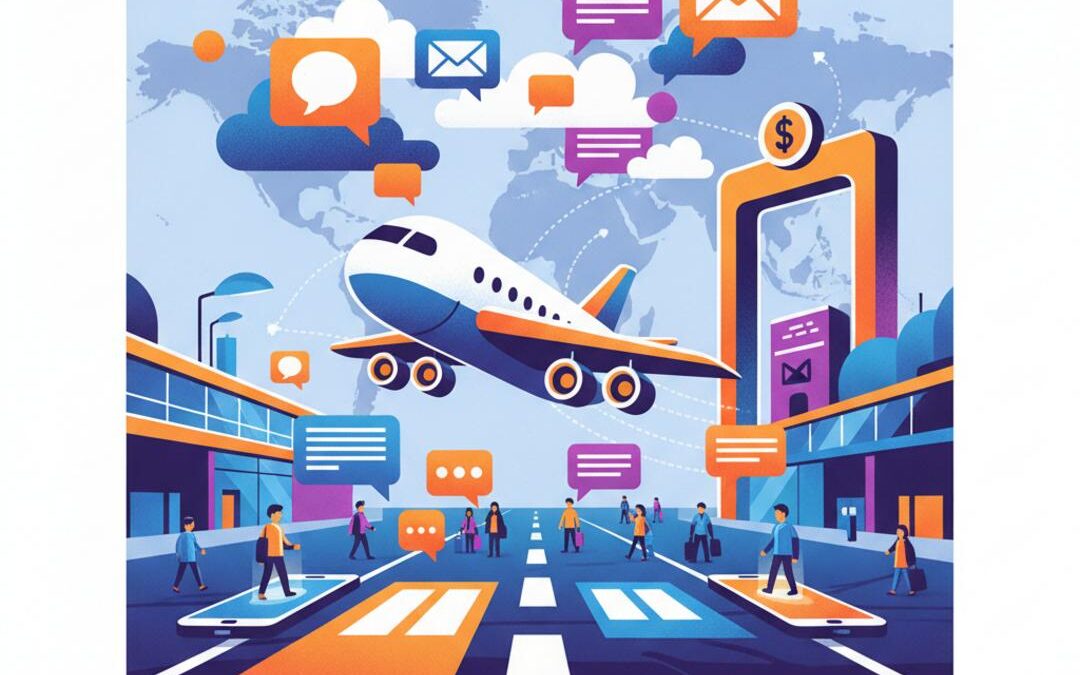
In 2026, an airline’s social media feed is its busiest departure gate. Every comment, DM, and reply is a chance to convert a follower into a passenger. But here’s the turbulence: unclear English can ground your marketing faster than a snowstorm. Aviation English for airline marketing teams isn’t just about grammar—it’s about communication that sells seats and builds trust. At NILDS, we’ve seen how the right words turn casual scrollers into loyal customers.

Why Clear English Is Your Conversion Runway

Digital marketing in aviation is crowded. Budget carriers, legacy airlines, and new entrants all fight for attention. Your English skills are the difference between a follower who books and one who bounces. According to industry data, 70% of consumers say clear communication influences their purchase decisions. For airlines, that means every tweet, caption, and response must be crisp, on-brand, and error-free.

The Cost of Poor Communication

A typo in a fare alert can confuse. A vague reply to a complaint can escalate. A poorly translated ad can offend. These aren’t minor issues—they cost revenue. English for airline digital marketing staff ensures your team avoids these traps. It’s not about perfection; it’s about clarity that converts.

Key Skills for Airline Social Media English Training

Great airline social media English training goes beyond vocabulary. It hones skills that directly impact the bottom line.

Writing Captions That Sell

Creative copywriting English for airlines is a craft. A caption must be short, witty, and clear—often in under 280 characters. It needs to spark wanderlust while including key details like routes, prices, and terms. Training helps marketers master tone: playful for leisure routes, professional for business class. This clarity drives clicks and bookings.

Responding with Empathy and Speed

Social media customer service English aviation is a high-stakes skill. A delayed flight triggers angry tweets. A clear, empathetic response can calm the storm. Training teaches teams to acknowledge issues, offer solutions, and maintain brand voice—all in concise English. This reduces escalation and turns frustrated passengers into advocates.

Speaking Confidently in Interviews and Meetings

Spoken English for aviation marketing teams matters too. From job interviews to cross-border campaign meetings, clear speech builds credibility. English for airline marketing professionals helps teams pitch ideas, negotiate with partners, and represent the brand globally.

Clear English isn’t just about grammar—it’s about communication that sells seats and builds trust, turning casual scrollers into loyal customers.

How NILDS Aviation English Training 2026 Bridges the Gap

NILDS specializes in aviation-focused English training. Our 2026 program is built for marketing and social media teams. We combine real airline case studies, live role-plays, and platform-specific exercises. Participants learn to write, speak, and respond with precision. The result? Faster response times, fewer errors, and higher conversion rates.

Real-World Practice for Real Results

Our training uses actual social media scenarios—from viral complaints to fare sale announcements. Teams practice crafting replies that convert. They learn to use keywords naturally, avoid ambiguity, and align with brand guidelines. This hands-on approach ensures skills stick.

Turning Followers Into Passengers: A Practical Checklist

Ready to improve? Start with these steps:

1

Audit your current English. Review your social media for clarity and tone across all channels.

2

Train on platform-specific writing. Adapt your team’s style for Twitter versus Instagram and beyond.

3

Create response templates. Draft answers for common queries, then personalize each one.

4

Upskill consistently. Use aviation English training 2026 to keep your team sharp and current.

5

Measure conversion rates. Compare results before and after training to track your progress.

Clear English isn’t a nice-to-have; it’s a revenue driver. Airlines that invest in aviation English for airline marketing teams see higher engagement, better reviews, and more bookings.

Final Approach: Communication That Converts

In 2026, the airlines that win are those that communicate clearly. Every post, reply, and caption is a chance to build trust and drive sales. By investing in English for airline digital marketing staff, you equip your team to turn followers into passengers—one clear message at a time. NILDS aviation English training 2026 gives your marketing team the edge to soar above the competition and land more bookings with every interaction.

Build the Skills for Your Global Career

Develop the communication, confidence and professional skills needed to become career-ready for aviation, hospitality and the global workplace.

Explore Aviation Training

Learn Today. Lead Tomorrow.

Why Clear English Prevents AOG Groundings in 2026

Why Clear English Prevents AOG Groundings in 2026

Aviation English

Aviation English for Line Maintenance Teams: Why Clear Communication Prevents AOG Disasters in 2026

In aviation, a single misunderstood word can cost an airline hundreds of thousands of dollars — yet in 2026, language barriers remain a hidden risk on the apron.

Estimated reading time: 6 minutes

Key Takeaways

  • When an aircraft on ground (AOG) situation occurs, flawless communication between engineering teams, line maintenance control, and flight deck crews becomes critical.
  • Misheard defect descriptions, unclear MEL references, and vague handovers can delay rectification by hours.
  • Cross-shift handover is where many AOG events begin — structured protocols reduce ambiguity and ensure continuity.
  • Training must go beyond generic business English to simulate real AOG scenarios, radio calls, and time-pressured briefings.
  • In 2026, clear English is not just a soft skill — it is a technical requirement that protects fleets, schedules, and reputations.

In aviation, a single misunderstood word can cost an airline hundreds of thousands of dollars. When an aircraft on ground (AOG) situation occurs, the pressure intensifies. Engineering teams, line maintenance control, and flight deck crews must communicate flawlessly. Yet, in 2026, language barriers remain a hidden risk. Aviation English for line maintenance teams is no longer a nice-to-have—it is a safety and operational imperative.

The High Cost of Miscommunication on the Apron

Aircraft on ground AOG communication English is critical when an aircraft is stranded. A misheard defect description, an unclear MEL (Minimum Equipment List) reference, or a vague handover can delay rectification by hours. For airline engineering staff, technical English proficiency directly impacts turnaround time. When a pilot reports a fault, the line maintenance control team must interpret it accurately, relay it to the hangar, and coordinate a fix. If any link in that chain weakens, the aircraft stays on the ground.

Defect Reporting: From Flight Deck to Maintenance

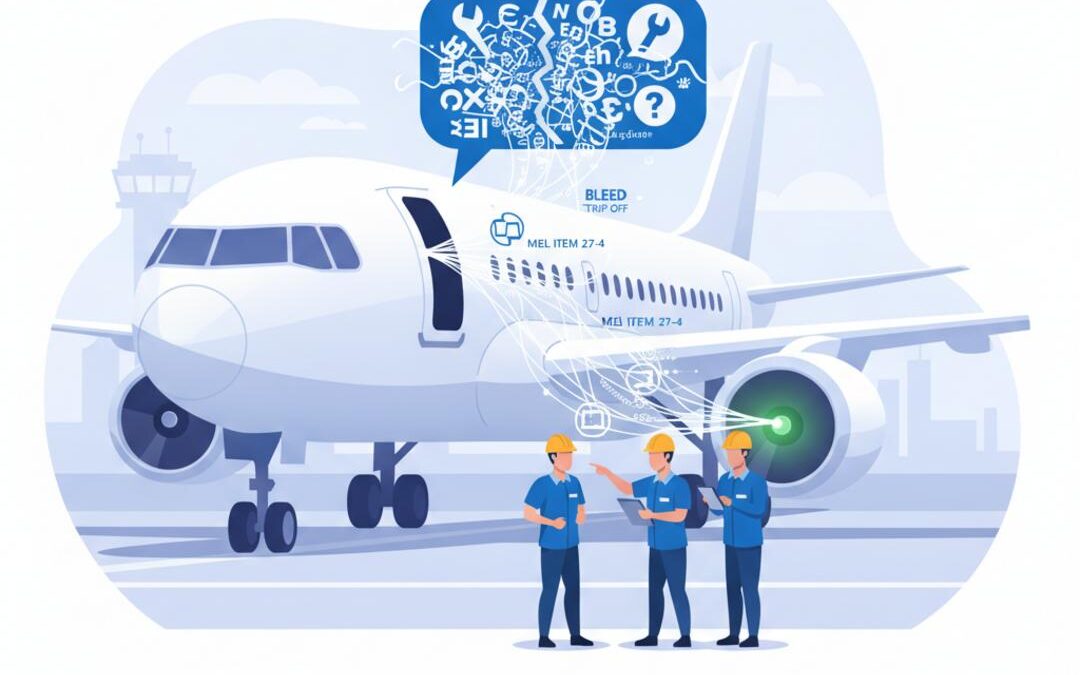
English for aircraft defect reporting is a core skill. Pilots often describe issues in rapid, colloquial terms. Engineers must translate these into precise technical actions. Consider a pilot reporting a “bleed trip.” Without clear spoken English for aviation engineers, a technician might misdiagnose the system. Maintenance control centre communication skills ensure that the defect is logged, prioritised, and assigned correctly. In 2026, with tighter schedules and older fleets, every minute counts.

When every link in the communication chain matters, a single misunderstood word on the apron can keep an aircraft on the ground for hours — clear aviation English is the difference between a quick fix and a costly AOG.

Cross-Shift Handover: The Silent AOG Trigger

Cross-shift handover communication aviation is where many AOG events begin. A tired engineer finishing a night shift may verbally pass on a minor defect. If that message is unclear, the next shift may overlook it. MEL and defect rectification English aviation training teaches structured handover protocols: what was found, what was done, what remains open. This reduces ambiguity and ensures continuity. Without it, an aircraft can be released with unresolved issues—or held unnecessarily.

Standardising Technical Documentation English

Aviation technical documentation English course content must cover reading and writing. Engineers frequently consult manuals, service bulletins, and logbooks. Misreading a torque value or a part number can lead to incorrect repairs. Technical English for aviation engineering teams includes comprehension of standard phraseology and abbreviations. When documentation is clear, rectification is faster and safer.

1

Defect reporting. English for aircraft defect reporting translates colloquial pilot reports into precise technical actions.

2

Cross-shift handover. Structured protocols covering what was found, done, and left open prevent silent AOG triggers.

3

Technical documentation. Reading and writing skills prevent misread torque values and part numbers in manuals and logbooks.

4

Scenario-based training. Simulating rushed pilot reports and time-pressured handovers builds real operational confidence.

5

Career advancement. Aviation engineering job interview English helps strong communicators become the go-to problem solvers.

Training That Targets Real Scenarios

Airline engineering and maintenance English training 2026 must go beyond generic business English. It should simulate AOG scenarios: a pilot’s rushed report, a control centre’s clarification call, a handover under time pressure. Line maintenance control English training should include role-plays between hangar, apron, and flight deck. Spoken English for aviation engineers improves confidence during radio calls and face-to-face briefings. Aviation engineering job interview English also matters—strong communicators advance faster and become the go-to problem solvers.

The NILDS Advantage

NILDS aviation English training is built for operational reality. It focuses on the exact phrases and structures needed for defect reporting, MEL application, and cross-shift handover. By integrating aviation English for airline engineering staff into daily workflows, airlines reduce miscommunication risk. The result is fewer AOG groundings, faster rectification, and safer operations. In 2026, clear English is not just a soft skill—it is a technical requirement. Investing in it protects your fleet, your schedule, and your reputation.

Build the Skills for Your Global Career

Develop the communication, confidence and professional skills needed to become career-ready for aviation, hospitality and the global workplace.

Explore Aviation Training

Learn Today. Lead Tomorrow.

Aviation English: Key to Loyal Flyers in 2026

Aviation English: Key to Loyal Flyers in 2026

Aviation English Training

Why Aviation English for Baggage Handling Staff Builds Customer Loyalty in 2026

In 2026, airline competition isn’t just about ticket prices or on-time performance—it’s about how you make passengers feel when things go wrong.

Estimated reading time: 7 minutes

Key Takeaways

  • Clear English communication from baggage teams de-escalates tension and turns frustrated flyers into loyal customers.
  • Studies show 70% of passengers who receive clear, proactive communication during baggage issues remain loyal.
  • Agents need precise vocabulary for PIR, WorldTracer, liability limits and compensation policies.
  • NILDS aviation hospitality English training uses real-world lost luggage role-plays to build confidence.

In 2026, airline competition isn’t just about ticket prices or on-time performance—it’s about how you make passengers feel when things go wrong. For baggage handling and lost luggage claims teams, clear communication is the secret weapon that turns frustrated flyers into loyal customers. Aviation English proficiency is no longer optional; it’s the difference between a complaint and a compliment.

Why Baggage Communication Matters More Than Ever

When a passenger’s luggage goes missing, emotions run high. They’re tired, anxious, and often far from home. Your team’s ability to explain the situation in clear, empathetic English can de-escalate tension instantly. Miscommunication leads to misunderstandings about compensation, delays in tracing, and ultimately, lost loyalty. Investing in English training for baggage handling staff ensures every interaction is handled with confidence and clarity.

The High Cost of Poor English in Baggage Claims

A simple mispronunciation or unclear instruction can escalate a routine baggage delay into a social media crisis. Studies show that 70% of passengers who receive clear, proactive communication during baggage issues remain loyal to the airline. Conversely, vague explanations about compensation or tracing timelines breed frustration. Spoken English for airline ground staff must include specialized vocabulary for claims, liability limits, and passenger rights.

Real-World Scenario: The Missing Suitcase

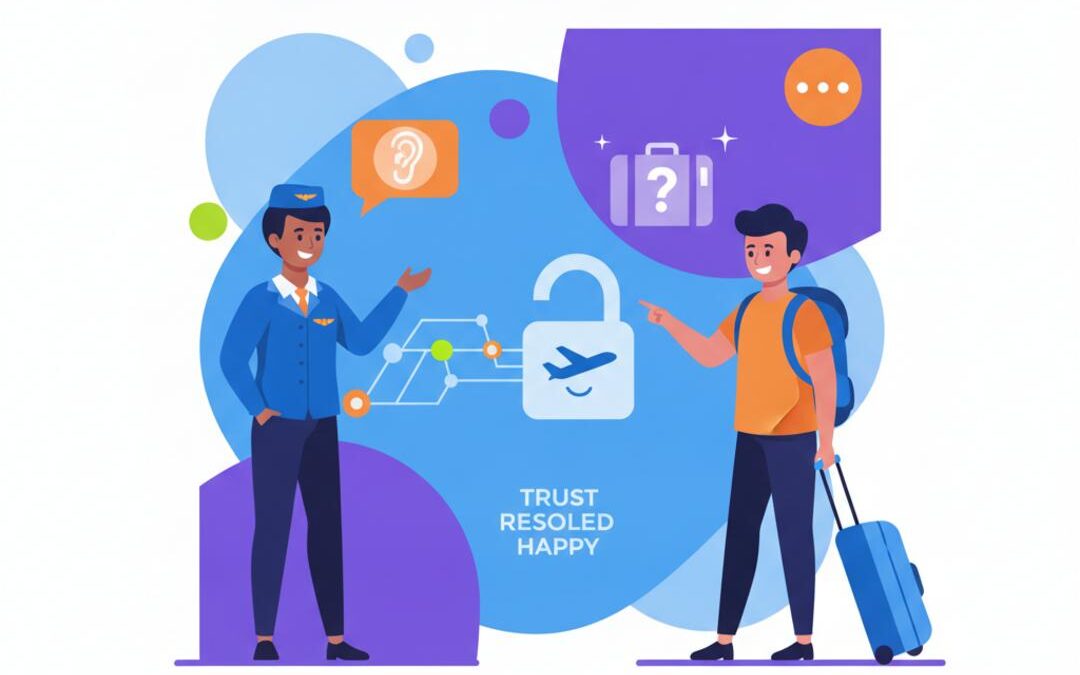
Imagine a passenger arriving in Mumbai from London, only to find their bag didn’t make the connection. If the agent says, “We will find it soon,” the passenger hears uncertainty. But an agent trained in aviation English for baggage handling staff might say, “I’ve initiated a trace for your bag. You’ll receive an update within 4 hours, and here’s your compensation eligibility for essentials.” That clarity builds trust.

Loyalty is earned in the moments of disruption—and clear English is the tool that turns those moments into opportunities.

Key English Skills for Baggage Teams

1

Passenger Compensation Communication English. Explaining allowances and claims requires precise language that avoids legal missteps and builds credibility.

2

Baggage Tracing and Claims Vocabulary. Terms like PIR, WorldTracer and liability limits must be used correctly and explained without jargon overload.

3

Empathetic Customer Service English. Genuine phrases for apologizing, reassuring and setting expectations require cultural sensitivity and active listening.

How NILDS Aviation English Training Transforms Teams

NILDS specializes in aviation hospitality English training India, focusing on real-world scenarios. Our programs include role-plays for lost luggage claims, baggage reconciliation communication training, and interview preparation for airline baggage service job interview English. Teams learn to handle angry passengers, explain complex policies, and document claims accurately—all in English.

Building Loyalty Through Clear Communication

When a baggage agent confidently explains the next steps, passengers feel valued. That positive experience, even during a mishap, creates a story they share. In 2026, loyalty is earned in the moments of disruption, and English proficiency is the tool that turns those moments into opportunities.

Invest in English, Reap Loyalty

Aviation English for baggage handling staff is not just about grammar—it’s about creating seamless customer journeys. By equipping your team with lost luggage claims English training and baggage delay and damage claim communication skills, you reduce complaints, speed up resolutions, and build a reputation for reliability. In a crowded market, clear communication is your competitive edge. Start training your baggage team today and watch frustrated flyers become your most loyal advocates.

Build the Skills for Your Global Career

Develop the communication, confidence and professional skills needed to become career-ready for aviation, hospitality and the global workplace.

Explore Aviation Training

Learn Today. Lead Tomorrow.

Aviation English: The Hidden Key to SAF Success

Aviation English

Aviation English for Fuel Management and Sustainability Teams: Leading the SAF Transition in 2026

English proficiency is no longer a soft skill for airline fuel and sustainability teams—it’s an operational necessity for leading the SAF transition.

Estimated reading time: 6 minutes

Key Takeaways

  • Aviation English for fuel management teams reduces costly errors across global supplier coordination and safety protocols.
  • Sustainable aviation fuel English training helps teams articulate technical and sustainability differences as SAF adoption accelerates.
  • Precise emissions reporting English ensures compliance with global schemes like CORSIA and avoids fines.
  • Interview English for airline environment teams sets candidates apart in a competitive hiring landscape.
  • NILDS aviation English training delivers industry-specific, scenario-based skills for fuel and environment staff.

The aviation industry is under immense pressure to decarbonize, and Sustainable Aviation Fuel (SAF) is at the forefront of that transition. But while technical solutions advance, a critical bottleneck remains: clear communication. For airline fuel management and sustainability teams, English proficiency is no longer a soft skill—it’s an operational necessity. In 2026, as SAF adoption accelerates, the ability to communicate precisely across departments, suppliers, and regulators will determine who leads and who lags.

Why Aviation English Matters for Fuel Management

Fuel management teams coordinate with global suppliers, interpret complex safety data, and negotiate contracts worth millions. A single misunderstanding can lead to costly errors. Aviation English for fuel management teams ensures that instructions, specifications, and safety protocols are conveyed without ambiguity. When your team can discuss fuel quality, delivery schedules, and contingency plans fluently in English, you reduce risk and improve efficiency.

The Role of English in SAF Adoption

SAF introduces new variables: different chemical compositions, varying supply chains, and stringent sustainability criteria. Sustainable aviation fuel English training helps teams understand and articulate these differences. From reading technical datasheets to participating in international SAF consortiums, English is the lingua franca. Without it, adoption slows, costs rise, and sustainability goals slip.

Clear Communication Drives Cost Efficiency

Fuel is an airline’s largest expense. Effective fuel optimization communication skills enable teams to share best practices, negotiate better terms, and avoid misunderstandings that lead to penalties. For example, when discussing fuel hedging strategies or emission trading schemes, precise English ensures all stakeholders are aligned. Airlines that invest in corporate English for airline fuel departments report fewer costly errors and faster decision-making.

When fuel and environment teams collaborate, shared English standards prevent silos—and faster SAF integration follows.

Emissions Reporting and Compliance

Aviation emissions reporting English is critical for compliance with global schemes like CORSIA. Sustainability teams must compile reports, respond to audits, and communicate with regulators—all in English. Misinterpretations can result in fines or reputational damage. Training in sustainability documentation English aviation ensures accuracy and confidence in every submission.

Interview English for Airline Environment Teams

As sustainability roles grow, competition intensifies. Airline environment team job interview English prepares candidates to articulate their expertise clearly. From explaining SAF lifecycle analysis to discussing carbon offset strategies, strong spoken English for aviation operations professionals sets candidates apart. NILDS aviation English training focuses on these real-world scenarios, giving teams the edge in hiring and promotion.

Building a Communication-First Culture

SAF communication skills aviation go beyond grammar—they’re about clarity under pressure. When fuel and environment teams collaborate, shared English standards prevent silos. Regular workshops and scenario-based training can embed this culture. The result? Faster SAF integration, better cost control, and a stronger sustainability narrative.

1

Faster SAF integration. Shared English standards remove friction between fuel and environment teams.

2

Better cost control. Precise communication reduces penalties and negotiation errors.

3

Stronger sustainability narrative. Clear English helps teams tell a compelling SAF story to stakeholders.

The NILDS Advantage

NILDS aviation English training is tailored for aviation professionals. Unlike generic courses, it integrates industry-specific vocabulary, case studies, and role-plays. Whether your team needs aviation sustainability English course modules or focused fuel cost communication training 2026, NILDS delivers practical skills. By investing in English for airline fuel and environment staff, you invest in operational resilience.

Conclusion

As SAF adoption accelerates, clear communication will separate industry leaders from followers. Aviation English is not just about language—it’s about safety, efficiency, and sustainability. Equip your fuel management and sustainability teams with the English skills they need to drive cost efficiency and lead the SAF transition in 2026 and beyond.

Build the Skills for Your Global Career

Develop the communication, confidence and professional skills needed to become career-ready for aviation, hospitality and the global workplace.

Explore Aviation Training

Learn Today. Lead Tomorrow.

Aviation English: Your Crisis Communication Lifeline

Aviation English

Aviation English for Crisis Communication: Why Clear Language Is Your Strongest Safety Net

In 2026, a single poorly worded statement can travel faster than any aircraft. When a flight is grounded, a delay cascades, or an accident makes headlines, the world watches how airlines respond.

Estimated reading time: 7 minutes

Key Takeaways

  • General business English is not enough when emotions run high and scrutiny is intense.
  • Crisis communication skills in aviation must cover written statements, live press conferences, social media, and passenger reassurance.
  • Scenario-based training builds fluency under fire for spokespersons and media teams.
  • In 2026, proactive English preparedness is a strategic imperative, not an optional extra.

In 2026, a single poorly worded statement can travel faster than any aircraft. When a flight is grounded, a delay cascades, or an accident makes headlines, the world watches how airlines respond. The language your team uses—clear, calm, and precise English—becomes your strongest safety net. This is where aviation English for crisis communication moves from a nice-to-have to a non-negotiable asset.

Why Crisis Communication in Aviation Demands Specialized English

General business English won’t cut it when emotions run high and scrutiny is intense. Aviation crises involve technical details, legal boundaries, and human empathy—all delivered under a media microscope. A misunderstood phrase in a press conference can spark panic. A vague incident statement can trigger lawsuits. Airline media response English training bridges this gap by teaching teams to translate complex operations into transparent, reassuring messages.

Consider a runway closure. Passengers need updates. Journalists want causes. Regulators demand facts. Your spokesperson must address all three without contradiction or speculation. That requires more than vocabulary—it requires crisis communication skills aviation professionals can rely on when adrenaline surges.

The Cost of Poor English in a Crisis

History shows that delayed or confusing statements amplify damage. Social media clips of an executive stumbling through an emergency public announcement can go viral in minutes. Brand trust, built over decades, erodes in hours. Conversely, a well-crafted apology or update can humanize an airline and even strengthen loyalty. The difference often comes down to training.

Core Skills for Airline Spokespersons and Media Teams

An airline spokesperson English course should cover more than pronunciation. It must build muscle memory for high-pressure scenarios.

1

Incident Statement Writing English Aviation. Written statements are permanent records that must acknowledge, express concern, and outline next steps without admitting liability.

2

Press Conference English for Aviation Executives. Live Q&A demands reflexes to field hostile questions and pivot politely to safety commitments.

3

Social Media Crisis Response English Airline. A 280-character reply can either defuse anger or fuel it, demanding speed and empathy.

4

Passenger Reassurance Communication During Disruption. Simple, warm English announcements at gates and terminals prevent chaos and confusion.

Building a Resilient Communications Team with NILDS

Airlines cannot afford to improvise. NILDS corporate English training offers tailored programs that simulate real crises—from engine failures to viral passenger videos. Participants practice incident statement writing English aviation, role-play media interviews, and receive feedback on clarity, empathy, and accuracy.

The goal is fluency under fire. When every word matters, your team should not hesitate. They should lead.

What Sets Effective Training Apart

  • Scenario-based learning: Recreate a crash landing or labor strike.
  • Cross-functional drills: Include PR, legal, and operations.
  • Cultural sensitivity: Address global passenger expectations.
  • Reputation management focus: Every phrase is measured against brand values.

Your crews train for mechanical failures. Your communications teams must train for linguistic ones. Because in a crisis, the right words don’t just inform—they protect, reassure, and rebuild.

The 2026 Imperative: Proactive English Preparedness

Aviation crisis management English 2026 is not just about reacting. It’s about anticipating. With AI-generated misinformation and 24/7 news cycles, airlines must pre-build message libraries and train teams to adapt them instantly. English proficiency is the throughline.

Investing in aviation PR and media English training now prevents catastrophic missteps later. It also signals to stakeholders that your airline values transparency and competence. In a sector where trust is the ultimate currency, clear English is your best insurance policy.

Your crews train for mechanical failures. Your communications teams must train for linguistic ones. Because in a crisis, the right words don’t just inform—they protect, reassure, and rebuild. Equip your airline with the English skills to weather any storm and keep brand trust flying high.

Build the Skills for Your Global Career

Develop the communication, confidence and professional skills needed to become career-ready for aviation, hospitality and the global workplace.

Explore Aviation Training

Learn Today. Lead Tomorrow.

Why Aviation English Decides Your Flight Schedule

Why Aviation English Decides Your Flight Schedule

Aviation English

Aviation English for Cabin Crew Rostering, Scheduling and Crew Control Teams in 2026

In crew control, language is not a soft skill — it is operational infrastructure that keeps flights moving when disruptions hit.

Estimated reading time: 7 minutes

Key Takeaways

  • Aviation English is operational infrastructure for rostering, scheduling, and crew control teams, not a soft skill.
  • Misunderstood roster emails and unclear handovers create duty limit breaches, fatigue risks, and uncovered bases.
  • Targeted aviation English training builds rostering vocabulary, disruption management language, and compliance documentation skills.
  • Scenario-based learning improves handovers, reduces errors, and supports career growth for crew controllers.
  • Airlines need an operations control centre where English is the default standard, backed by continuous training.

Global flight operations in 2026 run on split-second decisions, and every one of them depends on clear English. For cabin crew rostering, scheduling, and crew control teams, language is not a soft skill. It is operational infrastructure. When a typhoon closes a hub or a crew member calls in sick three hours before departure, the difference between a smooth recovery and a cascade of delays often comes down to how precisely your team communicates.

Why Aviation English Matters More Than Ever in 2026

Airline networks are more interconnected than at any point in history. A single roster change in Dubai can trigger crew legality issues in London, rest violations in Singapore, and passenger connections in New York. Crew controllers coordinate across time zones, regulators, and cultures, usually in English. Misunderstand a single word, and you risk misreading duty limits, misassigning a crew, or missing a disruption entirely.

The Cost of a Misunderstood Roster

A vague email about “standby coverage” can leave a base uncovered. An unclear handover about “reduced rest” can breach fatigue rules. These are not hypotheticals. They are daily risks in operations control centres where English is a second language for many team members. Aviation English training closes that gap by building the precise, standardised vocabulary that scheduling and crew control demand.

The Core English Skills Crew Scheduling Teams Need

Effective aviation English for crew scheduling teams goes beyond general fluency. It requires command of rostering terminology, legal phrasing, and disruption language.

1

Rostering and Scheduling Vocabulary. Crew controllers must discuss duty periods, flight time limitations, standby assignments, days off, and bid lines without ambiguity.

2

Disruption and Irregular Operations Language. When weather, technical faults, or ATC strikes hit, crew disruption management English becomes critical for explaining revised pairings and reassigning crew.

3

Documentation and Compliance English. Airline scheduling documentation English must be precise enough to withstand audits and fatigue reviews while protecting both the airline and its crew.

In crew control, the difference between a smooth recovery and a cascade of delays often comes down to how precisely your team communicates in English.

How Crew Control Teams Benefit From Targeted Training

English for crew roster and logistics staff is not the same as English for pilots or cabin crew. It is its own dialect of operations. A specialised aviation operations English course focuses on the scenarios controllers actually face.

Scenario-Based Learning That Sticks

Role plays covering sick calls, last-minute swaps, diversions, and union queries build confidence fast. Trainees practise spoken English for airline crew control staff in realistic, high-pressure simulations. This makes recall automatic when it matters.

Better Handovers, Fewer Errors

Shift handovers are where information dies. Structured crew resource communication training teaches teams to summarise disruptions, pending tasks, and crew welfare issues in a consistent format. The result is fewer dropped balls and faster recovery times.

Stronger Interviews and Career Growth

Airline scheduling job interview English is another hidden barrier. Many talented controllers miss promotions because they cannot articulate their experience clearly in English. Training builds the vocabulary and confidence to present technical work professionally.

Building an English-Ready Operations Culture

One trained controller is not enough. Airlines need an operations control centre where English is the default standard. That means onboarding new hires with technical English for crew planning professionals, running refresher sessions, and measuring language performance alongside operational KPIs. NILDS aviation English training is designed for exactly this environment, blending aviation-specific content with the fluency practice that busy schedulers need.

In 2026, the airlines that run on time will be the ones whose crew control teams communicate without friction. Roster changes, disruptions, and regulatory reviews will always come. Whether they become minor adjustments or major failures depends on the clarity of the English used to manage them. Invest in aviation English now, and your operations will speak the same language as success.

Build the Skills for Your Global Career

Develop the communication, confidence and professional skills needed to become career-ready for aviation, hospitality and the global workplace.

Explore Aviation Training

Learn Today. Lead Tomorrow.