Aviation English: The Key to Inclusive Flying in 2026

Aviation English: The Key to Inclusive Flying in 2026

Aviation English

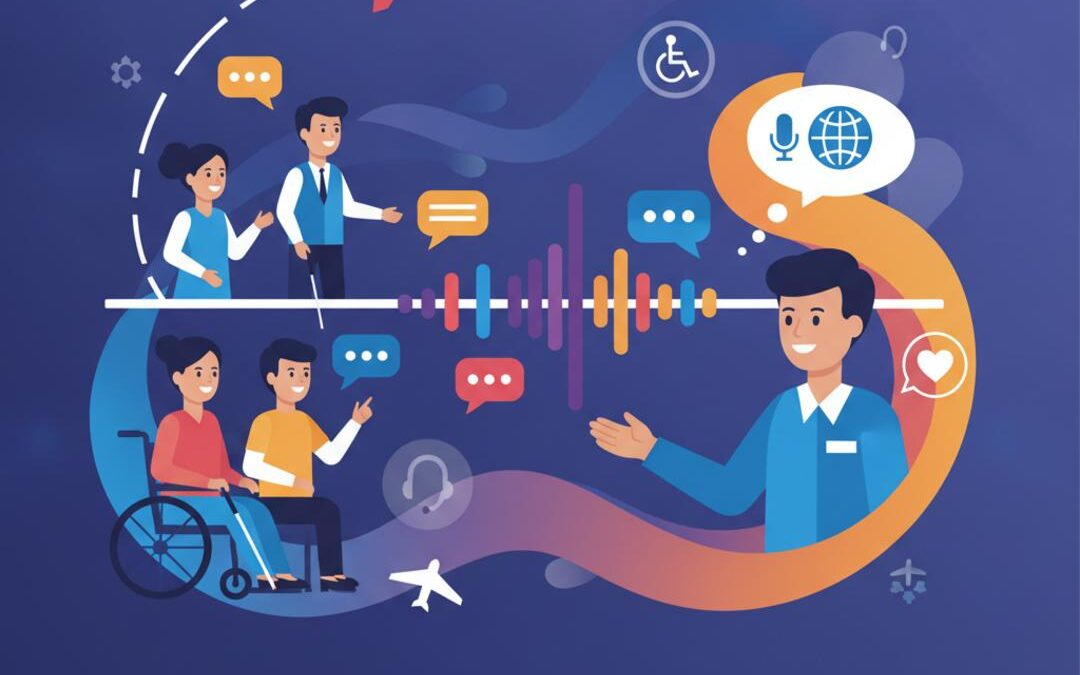
Aviation English for Special Assistance Teams: Inclusive Communication for PRM Passengers in 2026

Aviation connects the world, but for passengers with reduced mobility, hearing or visual impairments, the journey can be fraught with barriers.

Estimated reading time: 8 minutes

Key Takeaways

  • Aviation English for special assistance teams goes beyond vocabulary—it demands empathy, clarity, and confidence.
  • Compliance with EU 1107/2006 and the US Air Carrier Access Act is no longer enough; passengers expect dignity and ease.
  • PRM handling English covers a specific lexicon: aisle chairs, boarding ramps, service animals, sensory rooms, and hidden disabilities.
  • Scenario-based learning, vocabulary drills, soft skills integration, and assessment form the core of effective training.
  • Inclusive communication becomes a competitive differentiator for airlines competing for premium passengers.

In 2026, airlines and airports are under increasing pressure to deliver seamless, inclusive travel. The missing link? Aviation English tailored for special assistance teams. It’s not just about vocabulary—it’s about empathy, clarity, and confidence.

Why Inclusive Communication Is Non-Negotiable in 2026

Regulations like the EU 1107/2006 and the US Air Carrier Access Act have long mandated assistance. But compliance is no longer enough. Passengers expect dignity and ease. When special assistance staff lack strong English skills, miscommunication leads to missed wheelchairs, ignored requests, and stressful experiences. Inclusive communication training in aviation English bridges that gap, turning policy into practice.

The Cost of Poor Communication

A simple misunderstanding—”Please wait here” versus “Please proceed to gate”—can leave a visually impaired passenger stranded. For airline accessibility teams, English fluency ensures safety instructions, boarding procedures, and emergency protocols are conveyed accurately. It also reduces complaints and staff burnout.

Core English Skills for Special Assistance Teams

Aviation English for special assistance staff goes beyond standard phrases. It includes:

  • Greeting and reassurance: “Good morning, I’m here to assist you to the aircraft.”
  • Describing actions: “I will now guide your wheelchair up the ramp.”
  • Asking preferences: “Would you prefer to board first or last?”
  • Emergency instructions: “In case of evacuation, I will stay with you.”

These phrases build trust. They also require active listening and cultural sensitivity—key components of inclusive passenger experience communication.

Mastering PRM Handling English

PRM handling English aviation focuses on the specific lexicon of disability support: aisle chairs, boarding ramps, service animals, and sensory rooms. Staff must understand terms like “ambulatory,” “non-ambulatory,” and “hidden disability.” NILDS aviation English training covers these scenarios with role-plays and real-world simulations.

When staff can say, “I understand your needs, and I’m here to help,” they transform travel from ordeal to pleasure.

How to Train Your Team Effectively

An airline accessibility English course should be practical, not theoretical. Best practices for 2026 include:

1

Scenario-based learning. Simulate assisting a deaf passenger through security.

2

Vocabulary drills. Focus on wheelchair assistance communication English.

3

Soft skills integration. Pair language with empathy training.

4

Assessment. Use spoken English for airline support staff tests.

Inclusive communication training aviation must also address hearing and visually impaired passenger support. For example, staff learn to announce their presence, describe surroundings, and use clear, slow speech.

The Role of Spoken English

Spoken English for airline support staff is the heart of the job. Writing notes is rare; speaking is constant. Fluency reduces response time and increases passenger comfort. Even slight accents are fine—clarity matters more than perfection.

Benefits of Aviation English Training

Investing in English for airline accessibility teams yields measurable returns:

  • Higher passenger satisfaction scores
  • Fewer assistance-related incidents
  • Faster turnaround times
  • Enhanced staff confidence

Moreover, as aviation rebounds post-pandemic, competition for premium passengers grows. Inclusive communication becomes a differentiator. Airlines that train their special assistance ground staff in English will lead the market.

Beyond Compliance: A Cultural Shift

English for passengers with disabilities is not just a tool—it’s a mindset. This is the promise of aviation hospitality and accessibility English.

Getting Started with NILDS Aviation English Training

NILDS offers tailored programs for airlines, ground handlers, and airports. The curriculum covers:

  • Modular lessons from basic to advanced
  • Industry-specific vocabulary
  • Live practice with certified trainers
  • Progress tracking and certification

By 2026, inclusive flying should be the norm, not the exception. The key is English—spoken with clarity, delivered with care. Equip your special assistance teams today, and watch barriers disappear, one passenger at a time.

Build the Skills for Your Global Career

Develop the communication, confidence and professional skills needed to become career-ready for aviation, hospitality and the global workplace.

Explore Aviation Training

Learn Today. Lead Tomorrow.

Why Aviation English Wins Loyalty in 2026

Why Aviation English Wins Loyalty in 2026

Aviation English

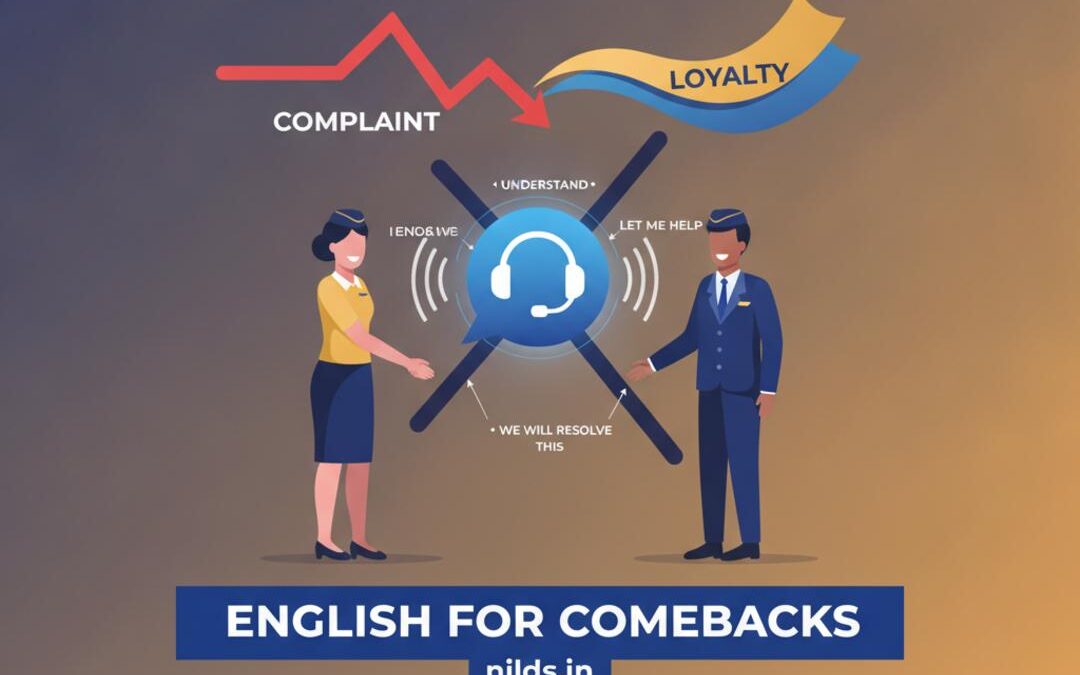
Aviation English for Service Recovery Teams: Turning Complaints into Loyalty in 2026

The difference between a customer who never returns and one who becomes a brand advocate often comes down to one skill: aviation English for service recovery teams.

Estimated reading time: 8 minutes

Key Takeaways

  • Well-handled complaints create more loyalty than problem-free experiences.
  • Aviation English is about tone, pacing, and emotional intelligence under pressure.
  • Recovery has three stages: listen with empathy, own the problem, resolve with a comeback.
  • A guest whose complaint is solved in under five minutes with empathy is 70% more likely to fly again.
  • Recovery English training must be continuous across the whole guest experience team.

In 2026, airline competition is no longer just about routes or fares. It is about how quickly and gracefully your team recovers when something goes wrong. A delayed flight, a lost bag, or a rude gate agent can destroy years of loyalty in seconds. The difference between a customer who never returns and one who becomes a brand advocate often comes down to one skill: aviation English for service recovery teams. When front-line staff master complaint handling English for airline staff, they turn frustration into trust.

The Real Cost of Poor Service Recovery Communication

Service failures are inevitable. How you communicate them is not. Research shows that customers who experience a well-handled complaint are more loyal than those who never had a problem at all. But that only happens when your team can listen, empathize, and resolve in clear, calm English. Without airline guest experience English training, agents may sound defensive, scripted, or confused. That escalates anger and pushes guests to social media or competitors.

Why Standard English Isn’t Enough

Aviation English is not just vocabulary. It is tone, pacing, and emotional intelligence under pressure. A guest yelling about a missed connection does not want perfect grammar. They want to feel heard. De-escalation English for aviation staff teaches phrases that acknowledge pain without admitting fault, offer solutions without overpromising, and guide the conversation toward a comeback. This is the core of turning complaints into loyalty English aviation.

How English Training Builds Comeback Skills

A strong aviation customer service English course focuses on three recovery stages: listen, own, and resolve.

1. Listen with Empathy

Agents learn to say, “I understand why you’re upset. Let me help.” Instead of “That’s not our policy.” Spoken English for airline customer experience teams must include active listening cues that show guests they matter.

2. Own the Problem

Taking ownership means using “I” and “we” language. “I will personally check your booking” beats “You need to call another department.” Professional communication for airline front-line teams turns blame into responsibility.

3. Resolve with a Comeback

A comeback is not just a refund. It is a memorable recovery. Agents trained in airline service failure recovery communication offer choices, follow up, and thank guests for their patience. That final touch transforms a complaint into a loyalty story.

Aviation English is not about being perfect — it is about being present, clear, and human in the language your guests understand.

The 2026 Advantage: Interview and On-the-Job English

Airlines now screen for recovery English during hiring. Airline guest experience job interview English often includes role-plays where candidates must calm an angry passenger. Without practice, even experienced agents freeze. Hospitality English for guest experience staff prepares them for these moments. NILDS aviation English training uses real airline scenarios, from overbooked flights to onboard medical diversions, so teams respond naturally.

Building a Recovery Culture

One trained agent is not enough. The entire guest experience team needs consistent language. Aviation guest relations English training 2026 should be ongoing, not a one-time workshop. Weekly huddles, peer feedback, and recorded simulations keep skills sharp. When everyone speaks the same recovery language, guests feel a seamless brand promise.

Turning Complaints into Loyalty: A Measurable ROI

Loyalty is not a soft metric. It shows up in repeat bookings, referrals, and lower acquisition costs. A guest whose complaint is solved in under five minutes with genuine empathy is 70% more likely to fly again. That is the power of aviation English for service recovery teams. It is not about being perfect. It is about being present, clear, and human in the language your guests understand.

1

Repeat bookings. Guests who feel heard return for their next trip.

2

Referrals. Recovered guests recommend the airline to others.

3

Lower acquisition costs. Loyal customers reduce the spend needed to win new ones.

Start with the Front Line

Gate agents, call center staff, and flight attendants are your recovery warriors. Invest in their spoken English for airline customer experience teams. Role-play angry passengers. Practice apologizing without blaming. Celebrate successful comebacks in team meetings. Over time, complaint handling becomes a loyalty engine.

In 2026, the airlines that win are not the ones with zero delays. They are the ones whose teams can say the right words at the worst moments. Master that, and every complaint becomes a chance to build a lifelong customer. That is the quiet superpower of aviation English for service recovery teams.

Build the Skills for Your Global Career

Develop the communication, confidence and professional skills needed to become career-ready for aviation, hospitality and the global workplace.

Explore Aviation Training

Learn Today. Lead Tomorrow.

Aviation English: Loyalty’s Secret Retention Weapon

Aviation English: Loyalty’s Secret Retention Weapon

Aviation English

Aviation English for Loyalty Program Staff: The Competitive Edge in Elite Member Retention

In 2026, the differentiator is no longer just the benefits—it is how those benefits are communicated.

Estimated reading time: 7 minutes

Key Takeaways

  • Aviation English for loyalty program staff is a strategic lever for retention, turning high-value members into lifetime brand advocates.
  • Elite member customer service English is about precise, warm, and solution-oriented communication—not perfect grammar.
  • Airlines with dedicated English for airline CRM and loyalty staff programs reported a 23% increase in elite member retention.
  • Continuous upskilling in aviation hospitality English for premium members ensures agents can de-escalate tense situations.
  • As AI handles basic queries, the human agent’s role in complex, emotional conversations becomes more critical than ever.

In the highly competitive aviation industry, loyalty programs are the backbone of sustainable revenue. Airlines invest millions in points, perks, and partnerships, yet often overlook the most critical touchpoint: the human conversation. For elite frequent flyers, every interaction with a service agent is a moment of truth. In 2026, as global travel rebounds and premium expectations soar, the differentiator is no longer just the benefits—it is how those benefits are communicated. Aviation English for loyalty program staff has emerged as a strategic lever for retention, transforming high-value members into lifetime brand advocates.

Why Elite Members Demand More Than Points

Frequent flyers at the top tier expect recognition, empathy, and seamless problem-solving. A delayed upgrade or a missed lounge access can be forgiven if the agent communicates with clarity and confidence. But when language barriers create confusion, frustration escalates. Elite member customer service English is not about perfect grammar; it is about precise, warm, and solution-oriented communication. Airlines that train their loyalty teams in spoken English for airline loyalty teams see a direct impact on member satisfaction scores and reduced churn.

The Psychology of Premium Communication

High-value members are often global citizens. They switch between languages and cultures effortlessly. When an airline agent mirrors their fluency and understands nuances—like the difference between ‘I want’ and ‘I would appreciate’—the interaction feels personalized. This is where loyalty program communication skills aviation training becomes crucial. It equips agents to handle tier upgrade and benefits communication with tact, ensuring that a member’s status feels valued, not transactional.

The Business Case for Aviation English Training

A 2025 industry study revealed that airlines with dedicated English for airline CRM and loyalty staff programs reported a 23% increase in elite member retention. Why? Because communication breakdowns are the leading cause of escalated complaints. When a frequent flyer calls about a missing mileage credit, they want a quick resolution. If the agent struggles to explain the process in English, the member perceives incompetence, not just a technical glitch. Aviation English training 2026 focuses on scenario-based learning: handling irate members, explaining complex fare rules, and upselling premium cabins without sounding pushy.

Retention Starts with the First Hello

For airline loyalty program job interview English, candidates are now tested on real-time problem-solving. But the training cannot stop at hiring. Continuous upskilling in aviation hospitality English for premium members ensures that even seasoned agents can de-escalate tense situations. Consider a tier upgrade and benefits communication scenario: an agent must explain why a member’s upgrade was waitlisted. Using empathetic English—’I understand how important this is to you, and here is what I can do’—turns a negative into a loyalty-building moment.

When language barriers create confusion, frustration escalates. Communication breakdowns are the leading cause of escalated complaints—and the biggest threat to elite member retention.

How NILDS Bridges the Gap

NILDS specializes in corporate English for airline loyalty teams India and beyond. Their curriculum is built around real aviation scenarios, not generic business English. From simulating frequent flyer elite service communication to mastering the tone for premium member handling, NILDS ensures agents are confident and culturally aware. The result? Faster call resolution, higher CSAT scores, and members who feel heard.

Integrating English into Loyalty KPIs

Airlines that treat English proficiency as a KPI see tangible ROI. Agents trained in aviation English for loyalty program staff are better at upselling, cross-selling, and recovering service failures. They transform routine calls into brand advocacy opportunities. In 2026, the most successful loyalty programs will be those that invest in their people’s voices, not just their technology.

The Future of Loyalty Is Conversational

As airlines deploy AI chatbots for basic queries, the human agent’s role is shifting to high-value, complex interactions. This makes spoken English for airline loyalty teams more critical than ever. The agents who can navigate emotional conversations, explain policies clearly, and make members feel special will be the ones who turn a gold card into a lifetime relationship.

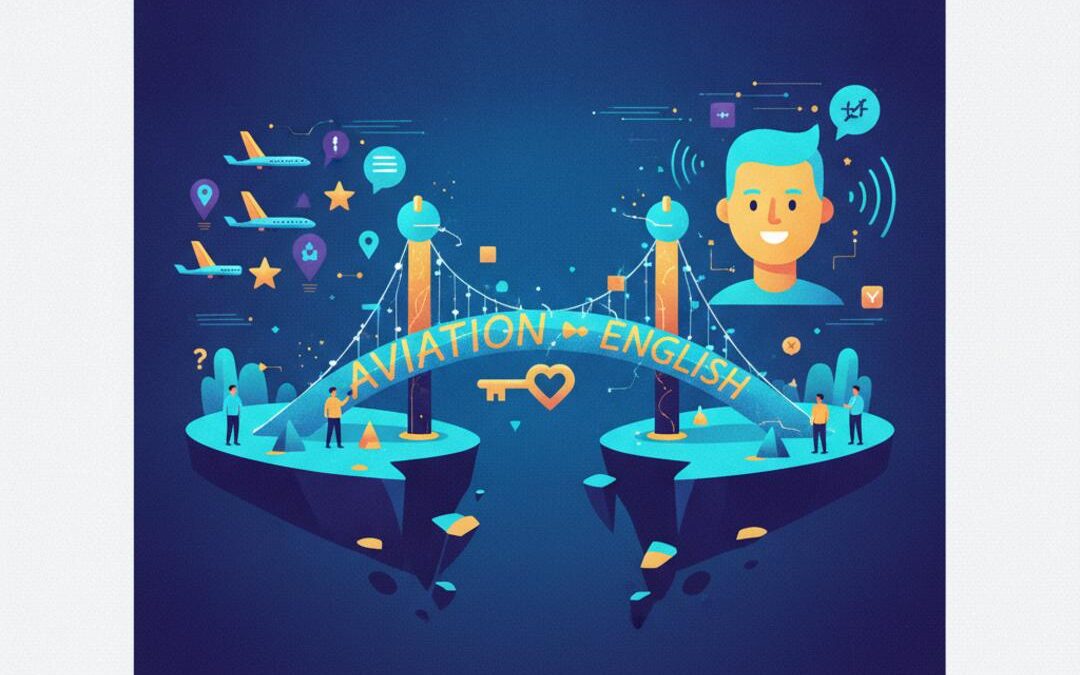
Aviation English is no longer a soft skill—it is a retention strategy. By prioritizing premium member handling English course content, airlines can ensure that every elite interaction reinforces the value of their loyalty program. In a world where points are easily replicated, the human connection remains the ultimate differentiator—and English is the bridge that makes it possible.

What the Most Successful Loyalty Programs Will Do in 2026

1

Invest in human voices. The most successful loyalty programs will prioritize agent communication over technology alone.

2

Treat English as a KPI. Proficiency directly impacts upselling, cross-selling, and service recovery outcomes.

3

Train continuously, not just at hiring. Ongoing scenario-based learning keeps seasoned agents sharp for complex interactions.

4

Turn calls into advocacy moments. Empathetic, clear English transforms routine service into loyalty-building experiences.

5

Bridge the human connection. English remains the ultimate differentiator where points can always be replicated.

Build the Skills for Your Global Career

Develop the communication, confidence and professional skills needed to become career-ready for aviation, hospitality and the global workplace.

Explore Aviation Training

Learn Today. Lead Tomorrow.

Aviation English for In-Flight Catering Crews in 2026

Aviation English for In-Flight Catering Crews in 2026

Aviation English

Aviation English for Catering Staff: Food Safety Communication at 35,000 Feet

In the high-stakes world of commercial aviation, a simple miscommunication about a meal can escalate into a medical emergency at 35,000 feet.

Estimated reading time: 8 minutes

Key Takeaways

  • In-flight catering is safety-critical, not just hospitality, because a single miscommunicated word about allergens can cause anaphylaxis or a regulatory violation.
  • Catering crews must master definitive allergen language, standardized special meal codes, and clear food hygiene reporting in English.
  • Role-plays, listening drills, and daily spoken English habits build the precision required for cabin crew and passenger interactions.
  • By 2026, airlines will require documented English proficiency for all catering staff who interact with cabin crew or passengers.

As airlines expand global routes in 2026, the demand for Aviation English for catering staff has never been higher. It is no longer enough to simply prepare and serve food; you must communicate complex allergen, dietary, and compliance requirements with absolute precision.

Why Aviation English for Catering Staff Is Non-Negotiable

In-flight catering is not just hospitality—it is safety-critical. When a passenger has a severe nut allergy or requires a gluten-free meal, the catering crew and cabin crew must share information flawlessly. Misunderstanding a single word can lead to anaphylaxis or a regulatory violation.

That is why food safety English training aviation programs are now mandatory for many airlines. These courses go beyond basic vocabulary. They teach you how to confirm special meal codes, report contamination risks, and document incidents using standardized aviation English.

The Risk of Ambiguity in Allergen Communication

Consider this: a catering staff member tells a flight attendant, “This meal might have traces of dairy.” The word “might” is dangerous. In aviation English, we use definitive language. You must say, “This meal contains no dairy ingredients but was prepared in a facility that handles dairy.” That clarity is the difference between safety and liability.

In aviation English, we use definitive language. That clarity is the difference between safety and liability.

Core Communication Skills for In-Flight Meal Service

To succeed in 2026, catering crews need more than food hygiene knowledge. They need targeted in-flight catering communication skills. Here are the key areas:

1. Allergen Communication English Aviation

You must master the vocabulary of the top 14 allergens: celery, cereals containing gluten, crustaceans, eggs, fish, lupin, milk, molluscs, mustard, peanuts, sesame, soybeans, sulphur dioxide, and tree nuts. You also need to explain cross-contamination risks without causing panic.

Practice phrases like: “This item is free from peanuts but packaged in a facility that processes nuts.” Using consistent, clear language reduces errors.

2. Dietary Requirements English for Cabin Crew

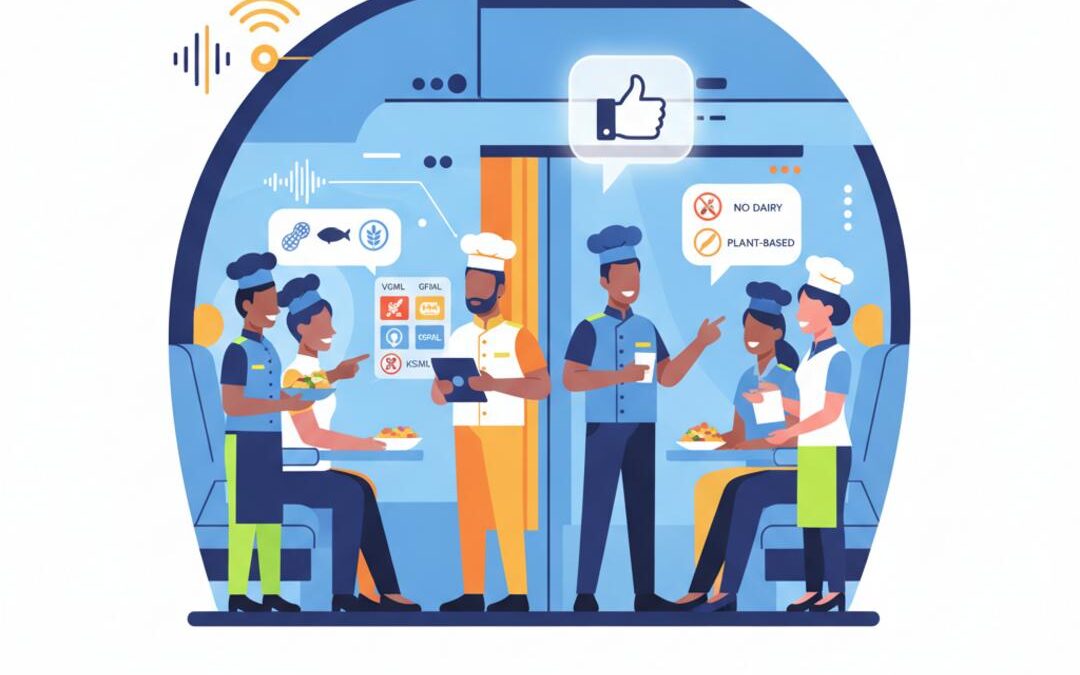
Dietary needs go beyond allergies. Religious, ethical, and medical diets require precise codes: VGML (vegan), AVML (Asian vegetarian), KSML (kosher), MOML (Muslim), and GFML (gluten-free). Catering crews must verify these codes against passenger manifests and communicate substitutions politely.

For example, instead of saying, “We ran out of vegan meals,” say, “The VGML is unavailable. I can offer a fruit platter and a plain salad, which are both plant-based.” This is passenger dietary needs English training in action.

3. Food Hygiene English for Aviation

Temperature logs, HACCP checks, and spoilage reports all require standardized English. You must report issues like: “The cold chain was breached for 12 minutes. The chicken entrée is no longer safe for consumption.” Vague terms like “a bit warm” are unacceptable.

How to Build These Skills: Aviation Hospitality English Course

A good aviation hospitality English course combines role-plays, listening drills, and real-world scenarios. You should practice:

1

Confirm meal counts with cabin crew. Use the phonetic alphabet for precision, such as “Alpha-1, Bravo-2.”

2

Report a missing special meal before boarding. Clear and timely reporting prevents last-minute confusion at the galley.

3

Handle passengers with limited English and dietary requests. Patience, simple phrasing, and confirmation checks keep communication safe.

4

Write a catering compliance report after a flight. Standardized written English ensures audits and follow-ups are accurate.

For airline catering job interview English, you will also need to describe your food safety knowledge clearly. Interviewers often ask: “How would you handle a last-minute allergen substitution?” Your answer must be structured and calm.

Spoken English for Airline Catering Staff: Daily Drills

Improve your spoken English for airline catering staff with these daily habits:

1

Shadow audio recordings of safety briefings. Repeating real briefings trains your ear and your pronunciation rhythm.

2

Record yourself explaining a meal’s ingredients in 30 seconds. This builds speed and clarity under time pressure.

3

Practice the NATO phonetic alphabet for meal codes. Letter-by-letter accuracy prevents meal mix-ups on board.

4

Role-play a scenario where a passenger claims a meal is wrong. Practicing calm correction keeps service professional and safe.

The Role of NILDS Aviation English Training in 2026

NILDS aviation English training is designed specifically for catering and food safety crews. Our program focuses on compliance language, allergen protocols, and cross-cultural communication. By 2026, airlines will require documented English proficiency for all catering staff who interact with cabin crew or passengers.

Investing in aviation English training 2026 is not just about passing a test. It is about protecting lives, reducing waste from miscommunication, and ensuring every passenger feels safe. Whether you are a caterer, a flight attendant, or a food safety auditor, your English must be as precise as your kitchen standards. Start training today, because at 35,000 feet, clarity is the only acceptable standard.

Build the Skills for Your Global Career

Develop the communication, confidence and professional skills needed to become career-ready for aviation, hospitality and the global workplace.

Explore Aviation Training

Learn Today. Lead Tomorrow.

Aviation English: The Skill Airlines Notice Most

Aviation English: The Skill Airlines Notice Most

Aviation English

The Voice That Builds Trust: Aviation English for Cabin Crew Announcements in 2026

In 2026, passenger trust in aviation is shaped before takeoff and after landing — often by a single voice over the public address system.

Estimated reading time: 8 minutes

Key Takeaways

  • Clear, calm, and confident PA communication directly influences how passengers perceive safety, professionalism, and care.
  • Trust is built through three vocal elements: clarity, pace, and warmth.
  • Effective announcements follow a simple formula: greeting, context, instruction, reassurance.
  • Scenario-based digital learning and VR simulations are reshaping how crew build announcement skills in 2026.
  • Crew who master in-flight announcement English are more likely to be promoted to purser or training roles.

While safety procedures and service standards remain critical, the words cabin crew choose during announcements now carry equal weight. Airlines are investing heavily in aviation English for announcements, recognizing that clear, calm, and confident communication directly influences how passengers perceive safety, professionalism, and care. This shift makes cabin crew PA announcement training more than a soft skill; it is a core operational requirement.

Why In-Flight Announcement English Matters More Than Ever

Passengers today are more informed and more anxious. They have access to real-time flight data, yet they still rely on cabin crew for reassurance during turbulence, delays, or emergencies. Study after study shows that a well-delivered PA announcement reduces passenger anxiety and increases compliance with safety instructions. Conversely, poor phrasing, rushed delivery, or unclear pronunciation can escalate panic. That is why spoken English for flight attendants has become a priority in hiring and promotion. Airlines want crew who can deliver routine messages — seatbelt signs, meal choices, duty-free — with the same clarity as emergency directives.

The Anatomy of a Trust-Building Announcement

Trust is built through three vocal elements: clarity, pace, and warmth. Clarity means pronouncing every consonant and vowel precisely, avoiding mumbling or swallowing word endings. Pace requires slowing down by 20% compared to normal conversation, especially during safety briefings. Warmth involves a subtle smile in the voice — a technique taught in voice and clarity training for cabin crew. When these three combine, passengers hear competence and empathy simultaneously. For example, instead of saying “We’re experiencing some turbulence,” a trained crew member says, “Ladies and gentlemen, we are currently passing through a patch of rough air. For your safety, please return to your seats and fasten your seatbelts. We expect this to last only a few minutes.” The second version uses English phrasing for cabin announcements that reassures rather than alarms.

The difference between a routine flight and a reassuring experience often comes down to one thing: whether every word is heard and believed.

Core Skills for Public Address Mastery

Pronunciation and Intonation

Aviation English for in-flight service demands neutral, widely intelligible pronunciation. Crew must avoid heavy regional accents that may confuse international passengers. Intonation matters too: a rising tone at the end of a sentence can sound uncertain, while a falling tone conveys authority. NILDS aviation English training drills these patterns until they become muscle memory.

Structured Phrasing

Passengers process information best in short, logical chunks. Effective announcements follow a simple formula: greeting, context, instruction, reassurance. For instance: “Good morning, passengers. We are beginning our descent into Delhi. Please ensure your seatbacks are upright and tray tables stowed. We will be on the ground in about 20 minutes.” This structure reduces cognitive load and builds confidence.

Handling Unexpected Situations

Medical emergencies, technical delays, or unruly passengers require spontaneous speaking. Cabin crew communication training India programs now include role-plays where crew must deliver impromptu announcements under stress. The goal is not perfect grammar but calm, intelligible, and compassionate English. Passenger announcement English courses teach phrases like “We appreciate your patience” and “A member of our team will assist you shortly” to buy time and maintain order.

How to Build These Skills in 2026

Airlines and training academies are shifting toward scenario-based digital learning. Virtual reality simulations allow crew to practice PA announcements in a realistic cabin environment, receiving instant feedback on volume, pace, and word choice. Customer reassurance English aviation modules focus on empathetic language. Additionally, cabin crew confidence building English workshops help crew overcome nervousness, which is often the biggest barrier to clear speech. Consistent practice — reading announcements aloud daily, recording yourself, and seeking feedback — remains the fastest path to mastery.

1

Virtual Reality Simulations. Practice PA announcements in a realistic cabin environment with instant feedback on volume, pace, and word choice.

2

Customer Reassurance Modules. Aviation-focused English modules that teach empathetic language for stressful and unpredictable situations.

3

Confidence Building Workshops. Help crew overcome nervousness, which is often the biggest barrier to clear speech.

4

Consistent Daily Practice. Reading announcements aloud, recording yourself, and seeking feedback remains the fastest path to mastery.

The Career Advantage

Crew who master in-flight announcement English are more likely to be promoted to purser or training roles. They become the voice passengers remember and trust. In a competitive industry, this skill differentiates you. Airlines are not just hiring fluent English speakers; they are hiring communicators who can turn a routine flight into a reassuring experience.

Investing in aviation English course 2026 programs is no longer optional for ambitious cabin crew. It is the difference between being heard and being believed. When every word builds trust, every flight becomes safer and more pleasant for everyone on board.

Build the Skills for Your Global Career

Develop the communication, confidence and professional skills needed to become career-ready for aviation, hospitality and the global workplace.

Explore Aviation Training

Learn Today. Lead Tomorrow.

Aviation English: The Hidden Key to IOSA Certification

Aviation English: The Hidden Key to IOSA Certification

Aviation Training

Why English Is the Real Safety Barrier for QA and IOSA Auditors in 2026

In the high-stakes world of airline safety, a single misunderstood phrase can ground an entire fleet.

Estimated reading time: 8 minutes

Key Takeaways

  • English is a mandatory operational tool for QA teams, SMS managers, and IOSA auditors, not a soft skill.
  • The IOSA audit process hinges entirely on communication during interviews, document review, and report writing.
  • A language gap in SMS reporting or audit response can become a genuine safety gap.
  • Scenario-based aviation compliance English training delivers more value than general English classes.
  • As aviation expands across India and Asia in 2026, fluency—not just proficiency—is the new benchmark.

As we approach 2026, the aviation industry faces a critical shortage: professionals who can navigate both complex regulations and the nuanced English required to prove compliance. For Quality Assurance (QA) teams, Safety Management System (SMS) managers, and IOSA auditors, English is not a soft skill—it is a mandatory operational tool.

Why Aviation English Is a Compliance Requirement

The International Air Transport Association (IATA) Operational Safety Audit (IOSA) is the global benchmark for airline safety. While the audit focuses on documentation, processes, and operational controls, the entire audit process hinges on communication. Auditors must interview staff, review manuals, and write reports in English. If your team struggles with aviation English for safety auditors, the audit itself becomes a risk.

Regulators worldwide now demand that safety-critical personnel demonstrate English proficiency. This isn’t just about reading a manual; it’s about explaining a corrective action plan, defending a risk assessment, or clarifying a safety report during a tense audit interview.

The Four Pillars of QA & Audit Communication

Effective communication in this niche requires more than general English. It demands precise, industry-specific language:

1

Regulatory Terminology. Understanding phrases like “acceptable means of compliance” or “root cause analysis.”

2

Audit Dialogue. The ability to ask clarifying questions without sounding confrontational and to answer questions with evidence-based clarity.

3

Documentation Precision. Writing findings that are factual, unambiguous, and aligned with IOSA ISARP standards.

4

Safety Narratives. Describing incidents and hazards using the structured language of SMS.

How IOSA Auditors Use Communication Skills

An IOSA auditor’s job is to verify that your airline meets over 900 standards. They do this through a mix of document review and face-to-face interviews. For the airline being audited, the ability to communicate effectively can mean the difference between a minor observation and a major non-conformity.

The Interview Dynamic

When an auditor asks, “Can you walk me through your de-icing procedure?” a vague answer like “We do it when it’s cold” is a red flag. A strong answer uses aviation compliance English course principles: “We initiate de-icing when visible moisture is present and the OAT is below 3°C, following our FAA-approved manual, section 4.2.”

This precision demonstrates control. It shows the auditor that your team understands the why behind the what. For QA professionals, mastering English for airline QA professionals means you can confidently present your safety case.

Writing the Finding

Auditors write reports in English, but QA teams must respond in English. A poorly written response to an audit finding can prolong the audit or damage your safety reputation. Aviation audit report writing English is a specialized skill. It requires the passive voice, objective language, and a clear link between the problem and the corrective action.

The SMS Connection: Communication as a Safety Barrier

A Safety Management System (SMS) is built on data and communication. Hazards are reported, risks are assessed, and safety assurances are communicated across the organization. If the language is inconsistent or ambiguous, the SMS fails.

Safety management system English training ensures that everyone from the ramp agent to the accountable executive speaks the same safety language. When a safety report is filed with grammatical errors or unclear phrasing, risk analysts may misinterpret the severity of the hazard.

When a safety report is filed with unclear phrasing, risk analysts may misinterpret the severity of the hazard — proving that a language gap in SMS is a safety gap in disguise.

Moreover, spoken English for airline compliance teams is vital during safety meetings. If a team member cannot articulate a concern about a new procedure, that concern is lost. In 2026, airlines are moving toward real-time safety data sharing, making clear English more important than ever.

Building a Language-Ready QA Team

Investing in English for aviation quality managers is an investment in safety. Traditional English classes fail because they don’t cover the specific lexicon of IOSA, SMS, or QA. What is needed is scenario-based training that mimics an audit, a safety review, or a regulatory inspection.

A specialized aviation compliance English course focuses on the exact tasks your team performs daily:

1

Conducting internal audits in English. Building confidence to lead reviews without hesitation.

2

Writing SMS reports. Using precise, objective language that risk analysts can act on.

3

Presenting safety cases to leadership. Articulating complex arguments with clarity and evidence.

4

Interacting with foreign regulators. Handling inspections and inquiries with professional composure.

By integrating language training with technical safety training, you create a workforce that is both competent and confident.

The 2026 Outlook

As aviation rebounds and expands, the demand for IOSA certification preparation English will only grow. Airlines in India and across Asia are expanding rapidly, and their QA teams must be ready to operate on a global stage. English is the language of aviation safety, and fluency—not just proficiency—is the new standard.

Don’t let a language gap become a safety gap. Equip your QA and compliance teams with the aviation English skills needed to pass audits, strengthen SMS, and keep passengers safe. The skies are unforgiving, but with the right communication skills, your airline can soar with confidence and compliance.

Build the Skills for Your Global Career

Develop the communication, confidence and professional skills needed to become career-ready for aviation, hospitality and the global workplace.

Explore Aviation Training

Learn Today. Lead Tomorrow.