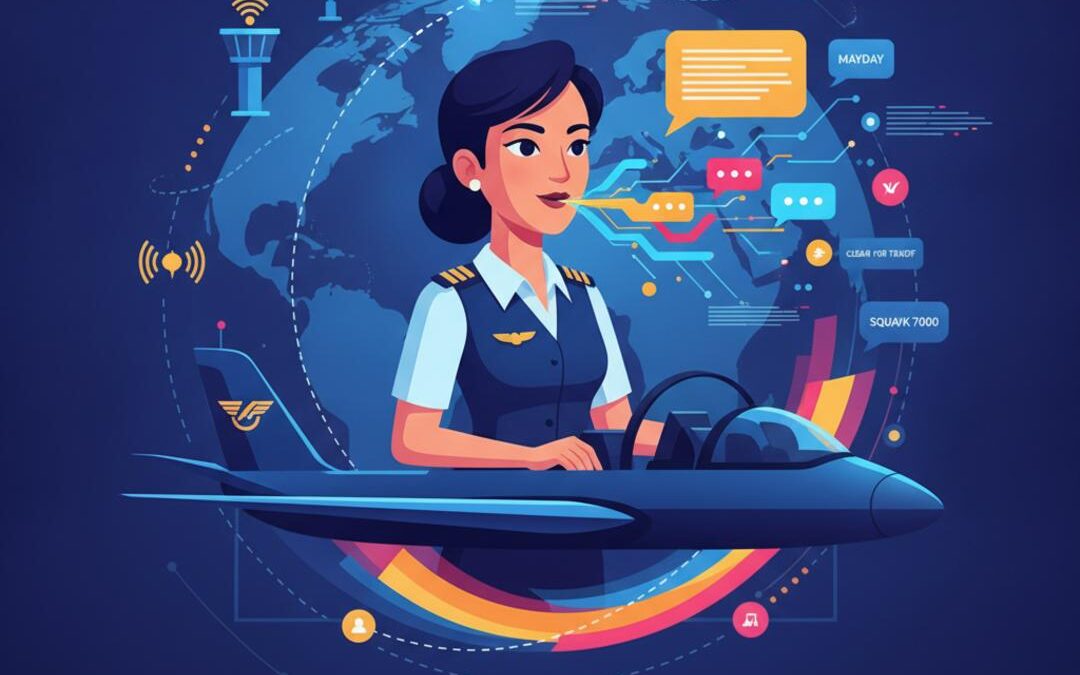
Aviation English: Your 2026 Cabin Crew Promotion Key

Aviation English: Your 2026 Cabin Crew Promotion Key

Cabin Crew Careers

Aviation English for Cabin Crew Promotions: Your 2026 Career Blueprint

Moving from economy to business or first class isn’t just about seniority — airlines promote crew who can communicate flawlessly with high-value passengers.

Estimated reading time: 7 minutes

Key Takeaways

  • Premium cabins demand relational communication, not transactional service.
  • Airlines test English proficiency during promotion interviews for business and first class.
  • Three pillars matter most: service terminology, diplomatic communication, and purser leadership English.
  • Start preparing six months before your promotion window with daily aviation English practice.
  • First class requires near-native fluency — begin building it today.

In 2026, aviation English for cabin crew promotions will be the deciding factor. Here is how to prepare.

Why Premium Cabins Demand Superior English

Economy service is transactional. Premium cabins are relational. A business class passenger expects you to anticipate needs, explain wine pairings, and handle complaints with diplomatic grace. A first class guest wants conversation that feels effortless. Poor English creates distance. Excellent English builds trust. Airlines know this, so they test language skills during promotion interviews. If you cannot describe a meal’s ingredients or de-escalate a seat dispute smoothly, you will stay in economy.

The Three Language Pillars for Promotion

Pillar 1: Precision in Service Terminology

Business class service English training covers more than please and thank you. You must know terms like amuse-bouche, lie-flat seat, turndown service, and aperitif. Using the wrong word sounds unprofessional. In first class, you might discuss vintage champagne or dietary restrictions with a chef’s precision. NILDS aviation English training drills these terms until they become automatic.

Pillar 2: Diplomatic Communication Under Pressure

Premium passengers pay for perfection. When a meal is wrong or a seat won’t recline, your English must calm, not escalate. Learn phrases like ‘I completely understand your frustration’ and ‘Let me find a solution immediately.’ These premium service communication skills aviation employers look for separate good crew from great crew.

Pillar 3: Leadership and Purser Readiness

The purser role English skills include briefing the crew, writing reports, and coordinating with the flight deck. If you want to lead a premium cabin, you need command English. That means clear announcements, assertive but polite instructions, and the ability to mediate between passengers and staff.

The question every airline interviewer asks without saying it: can this crew member speak the language of luxury under pressure?

How to Build These Skills Before 2026

Enroll in a Premium Cabin Crew English Course

Generic business English won’t help. You need a premium cabin crew English course that uses aviation scenarios. Look for modules on wine service, gourmet menu descriptions, and luxury in-flight service English. NILDS offers role-play simulations with real premium cabin scripts.

Practice Grooming and Etiquette in English

Cabin crew grooming and etiquette for premium cabins includes verbal grace. Record yourself greeting a first class passenger. Do you sound warm? Confident? Fluent? Ask a coach to critique your pronunciation and pacing.

Study Real Promotion Interviews

How to get promoted as cabin crew starts with knowing the questions. Airlines ask: ‘How would you handle a VIP who refuses to fasten their seatbelt?’ or ‘Describe a time you went beyond service expectations.’ Answer in English, using the STAR method. Practice until your answers flow naturally.

Take Cabin Crew Upskilling Courses

Cabin crew upskilling courses in 2026 will focus on cross-cultural communication and digital service tools. But English remains the foundation. Without it, you cannot learn the rest.

The 2026 Career Progression Timeline

Cabin crew career progression 2026 is faster for bilingual and English-fluent crew. Many airlines now require a minimum English proficiency score for business class. First class requires near-native fluency. Start six months before your promotion window. Dedicate 30 minutes daily to aviation English for cabin crew promotions. Use flashcards for vocabulary, shadowing for pronunciation, and mock interviews for confidence.

1

Build Vocabulary Daily. Use flashcards for premium service terminology until it becomes second nature.

2

Practice Shadowing. Repeat premium cabin announcements aloud to refine pronunciation and pacing.

3

Run Mock Interviews. Simulate promotion panels to build confidence under real interview pressure.

4

Commit 30 Minutes Daily. Consistency over six months delivers fluency faster than cramming ever will.

5

Target Proficiency Scores. Meet the minimum English score for business class, aiming higher for first class.

Final Thought

Your technical service skills got you hired. Your English skills will get you promoted. In 2026, airlines will not gamble on crew who cannot speak the language of luxury. Invest in first class cabin crew skills today, and you will wear the premium cabin uniform tomorrow. The runway to your promotion is paved with words—learn them well.

Build the Skills for Your Global Career

Develop the communication, confidence and professional skills needed to become career-ready for aviation, hospitality and the global workplace.

Explore Aviation Training

Learn Today. Lead Tomorrow.

Why Aviation English Shapes Smart Airports in 2026

Why Aviation English Shapes Smart Airports in 2026

Aviation English

Why Aviation English Is the Backbone of Smart Airports in 2026

Airport terminals are no longer just buildings — they are intelligent ecosystems where data, design, and human communication converge, and the smartest infrastructure still fails without clear English.

Estimated reading time: 6 minutes

Key Takeaways

  • Aviation English is now a core operational skill, not a nice-to-have, for terminal design and passenger flow teams.
  • Poor communication silently drives bottlenecks, missed connections, and passenger frustration even in world-class terminals.
  • Effective 2026 training blends industry-specific vocabulary with real airport disruption and coordination scenarios.
  • Strong English fluency delivers measurable gains in on-time performance, passenger satisfaction, and staff confidence.
  • The smartest airports share one common English standard across every team, from architects to apron staff.

In 2026, airports are intelligent ecosystems where data, design, and human communication converge. Yet even the most advanced smart airport can fail if the people running it cannot communicate clearly. For terminal design and passenger flow teams, Aviation English is no longer a nice-to-have. It is a core operational skill.

The Hidden Cost of Poor Communication in Airports

Every day, airport planning teams, operations managers, and terminal staff coordinate across dozens of touchpoints. A single misunderstood announcement, ambiguous sign, or unclear handover can cause bottlenecks, missed connections, and frustrated passengers. Research consistently shows that passenger experience hinges on clarity — from wayfinding to boarding calls. When English is inconsistent across these channels, even world-class infrastructure underperforms.

Why Terminal Design Teams Need English Fluency

Designing a terminal requires collaboration with international architects, vendors, and regulators. Technical English for airport planning professionals ensures that specifications, safety cases, and passenger flow models are understood precisely. A minor translation error in a wayfinding brief can cascade into costly redesigns or compliance issues. In 2026, design teams that communicate confidently in English deliver faster, safer, and more passenger-centric terminals.

A minor translation error in a wayfinding brief can cascade into costly redesigns or compliance issues — which is why English fluency belongs in the design room, not just the departure gate.

Passenger Flow Communication Skills: The Operational Backbone

Passenger flow is not just about queue management software. It is about how staff direct, inform, and reassure travellers. Ground staff, security teams, and customer service agents must use consistent English for airport terminal operations staff. This includes standard phrases for announcements, signage, and conflict resolution. When teams share a common English standard, they reduce confusion and move passengers more efficiently.

Smart Airport English Training: Beyond Vocabulary

Smart airports rely on digital twins, AI-driven forecasting, and real-time data. But the humans interpreting that data need English to act on it. Airport planning team English courses now focus on scenario-based learning: simulations of disruptions, irregular operations, and multi-team coordination. Aviation English for airport operations managers must cover technical reporting, stakeholder briefings, and crisis communication.

What Effective Aviation English Training Looks Like in 2026

The best programs blend industry-specific vocabulary with real airport scenarios. Look for courses that cover:

1

Signage and announcements English. Build a consistent standard across every visible and spoken passenger touchpoint.

2

Customer journey English. Cover the full airport experience from curb to gate with clear, empathic language.

3

Airport job interview English. Support hiring and promotion decisions with confident, professional communication.

4

Technical English for planners. Ensure specifications, safety cases, and flow models are understood precisely.

5

Passenger experience communication training. Equip frontline teams to reassure, redirect, and resolve with clarity.

In India, terminal operations English training is becoming a priority as airports like Delhi, Mumbai, and Bengaluru expand. Teams that invest in aviation English training see measurable gains in on-time performance and passenger satisfaction scores.

The Business Case for English Training

Smart airports compete on experience. When passenger flow communication skills are strong, airports reduce missed flights, lower staff stress, and improve retail dwell time. English fluency also opens doors for international partnerships and career growth. For airport design and operations English, the return on investment is both operational and strategic.

Building a Communication-First Airport Culture

Technology alone will not make an airport smart. The smartest airports in 2026 are those where every team — from architects to apron staff — shares a common English standard. This requires leadership commitment, regular training, and a culture that values clarity. Aviation English 2026 is not about perfect grammar; it is about operational precision and passenger empathy.

As terminals grow more complex, the ability to communicate across roles and borders becomes the ultimate infrastructure. Investing in Aviation English for terminal design and passenger flow teams is investing in the future of seamless travel. The world’s smartest airports will be those where every word works as hard as every system.

Build the Skills for Your Global Career

Develop the communication, confidence and professional skills needed to become career-ready for aviation, hospitality and the global workplace.

Explore Aviation Training

Learn Today. Lead Tomorrow.

Aviation English: The Pilot Skill Airlines Demand

Aviation English: The Pilot Skill Airlines Demand

Aviation English

Aviation English for CPL Students and Cadet Pilot Programs in 2026

The runway to a commercial pilot career is paved with technical knowledge, flight hours, and one often-overlooked skill: aviation English.

Estimated reading time: 8 minutes

Key Takeaways

  • English proficiency is a licensing requirement for CPL students in India, not just a bonus.
  • DGCA and ICAO require at least Level 4 operational proficiency for international flying.
  • Cadet pilot programs use English as a hidden selection filter in group discussions and interviews.
  • Immersion, pressure speaking, vocabulary, and accent training build aviation English skills.
  • Airlines in 2026 reward pilots who communicate decisively, calmly, and accurately.

The runway to a commercial pilot career is paved with technical knowledge, flight hours, and one often-overlooked skill: aviation English. For CPL students and cadet program candidates in India, English proficiency is not just a bonus—it is a licensing requirement and a career differentiator. Airlines in 2026 demand pilots who can communicate flawlessly under pressure, and your English skills will be tested long before you enter a cockpit.

Why Aviation English Matters More Than Ever

Aviation English is the global language of the skies. The International Civil Aviation Organization (ICAO) mandates English language proficiency for all pilots flying internationally. In India, the DGCA pilot English requirement aligns with ICAO standards, meaning you must demonstrate at least Level 4 operational proficiency. But passing a test is only the beginning.

Airlines use English in every phase of operations: pre-flight briefings, ATC communications, crew resource management, and emergency scenarios. Miscommunication has contributed to real accidents. That is why cadet pilot programs and airlines screen candidates rigorously for spoken English, comprehension, and the ability to think in English during high-stress situations.

Your English skills will be tested long before you enter a cockpit—and miscommunication has contributed to real accidents.

The DGCA and ICAO English Proficiency Framework

The DGCA requires pilots to hold a valid English Language Proficiency (ELP) endorsement. This involves a test covering pronunciation, structure, vocabulary, fluency, comprehension, and interactions. You need to score at least Level 4 to operate internationally. Levels 5 and 6 offer longer validity and greater career flexibility.

For CPL students, this means English training cannot be an afterthought. It must be integrated into your ground school and flight training from day one. Cadet program candidates face additional hurdles: group discussions, personal interviews, and simulator assessments—all conducted in English.

How CPL Students Can Build Aviation English Skills

1

Immerse Yourself in Aviation English Daily. Listen to live ATC feeds, watch aviation documentaries, and read pilot forums to build reflexes.

2

Practice Speaking Under Pressure. Join mock interviews and role-play ATC exchanges to communicate when things go wrong.

3

Master Aviation Vocabulary and Idioms. Build a glossary—from “mayday” to “squawk”—and use it in sentences, not just flashcards.

4

Improve Comprehension of Accents. Train your ear with global ATC recordings to handle international crews and controllers.

1. Immerse Yourself in Aviation English Daily

Listen to live ATC feeds, watch aviation documentaries, and read pilot forums. Focus on standard phraseology as well as plain English used in non-routine situations. NILDS aviation English training programs simulate real-world radio calls and emergency scenarios to build reflexes.

2. Practice Speaking Under Pressure

Airlines test your ability to communicate when things go wrong. Join mock interviews, role-play ATC exchanges, and practice explaining technical concepts in simple English. Record yourself and review for clarity, pace, and filler words.

3. Master Aviation Vocabulary and Idioms

From “mayday” to “squawk,” aviation has a distinct lexicon. But plain English matters too—describing weather, mechanical issues, or passenger behavior. Build a glossary and use it in sentences, not just flashcards.

4. Improve Comprehension of Accents

You will fly with international crews and speak to controllers with varied accents. Train your ear with global ATC recordings. This is a core part of pilot communication skills 2026 candidates are expected to have.

Cadet Pilot Program English: The Hidden Selection Filter

Cadet pilot programs in India and abroad are highly competitive. English is often the first filter. Group exercises test your ability to lead, negotiate, and present ideas clearly. Interviews probe your motivation and situational judgment. If you hesitate or struggle to express yourself, you will be overlooked—even with strong math and physics scores.

English for commercial pilot training includes technical report writing, checklist reading, and crew briefings. Cadet programs look for candidates who can switch between casual conversation and precise operational language.

Building a 2026-Ready English Strategy

Start early. Take an aviation English course for CPL students that covers ICAO descriptors. Practice with native and non-native speakers. Read aviation safety reports and summarize them aloud. Simulate radio calls with a partner. Most importantly, treat English as a core flight skill, not a language test.

NILDS aviation English training is designed for aspiring pilots who want to clear DGCA and airline selection with confidence. The program blends ICAO English for pilots with interview preparation, group discussion practice, and real-time communication drills.

Your Career Takes Off With Clear Communication

Aviation English is not a hurdle to clear once—it is a lifelong professional asset. Airlines in 2026 will reward pilots who can communicate decisively, calmly, and accurately. Whether you are a CPL student or a cadet program candidate, mastering spoken English for pilot cadets is the smartest investment you can make. Start your aviation English training today and position yourself as the pilot every airline wants to hire.

Build the Skills for Your Global Career

Develop the communication, confidence and professional skills needed to become career-ready for aviation, hospitality and the global workplace.

Explore Aviation Training

Learn Today. Lead Tomorrow.

Why AI Can’t Replace Aviation English Fluency

Why AI Can’t Replace Aviation English Fluency

Aviation English

AI Translation vs Human Aviation English Fluency: Why Machines Still Can’t Fly the Plane

AI translation tools are advancing fast, but when you’re in a cockpit at 35,000 feet, seconds matter—and so does accuracy.

Estimated reading time: 8 minutes

Key Takeaways

  • Aviation English relies on standardized ICAO phraseology where a single misunderstood preposition can cause a runway incursion.
  • Machine translation adds latency and lacks the situational awareness needed in emergencies.
  • ICAO language proficiency standards require spontaneous, real-world communication — not assisted translation.
  • Reliance on a single AI system creates a dangerous single point of failure.
  • Human fluency combines language, judgment and experience in a way no algorithm can replicate.

AI translation tools are advancing fast. In 2026, real-time translation apps can handle dozens of languages in seconds. But when you’re in a cockpit at 35,000 feet, seconds matter—and so does accuracy. The question isn’t whether AI can translate. It’s whether AI can be trusted when lives are on the line. For aviation professionals, the answer remains clear: human aviation English fluency still beats the machine.

The Unique Demands of Aviation Communication

More Than Words: Phraseology and Precision

Aviation English isn’t casual conversation. It’s a highly standardized language built on ICAO phraseology, where every word has a specific meaning. “Cleared for takeoff” isn’t the same as “cleared for departure.” A single misunderstood preposition can lead to a runway incursion. AI translation tools often struggle with this nuance. They’re trained on general language, not the rigid, safety-critical vocabulary of aviation.

Real-Time Pressure and Cognitive Load

In an emergency, pilots and air traffic controllers must communicate instantly. There’s no time to type a sentence into a translation app or wait for a generated voice. Machine translation adds latency—even a two-second delay can be catastrophic. Human fluency, by contrast, allows for immediate, intuitive responses. That’s why ICAO language proficiency standards emphasize spontaneous, real-world communication, not assisted translation.

Where AI Falls Short in the Cockpit

Context and Ambiguity

AI models excel at pattern recognition, but they lack situational awareness. If a controller says, “Descend to flight level two zero zero,” an AI might correctly translate the numbers. But if the pilot responds with “Unable due to weather,” the AI may not grasp the urgency or the need for a revised clearance. Human fluency captures tone, intent, and context—elements no algorithm can fully replicate.

Accents, Dialects, and Non-Standard Speech

Aviation English is spoken by people from every corner of the globe. Accents vary widely. AI translation tools often falter with heavy accents or non-standard pronunciation. A human listener, trained in aviation English, can adapt and clarify. A machine might mishear “three” as “tree” or “nine” as “niner”—errors that could have deadly consequences.

Failure Modes and Redundancy

What happens when the AI translation tool crashes? Or when the cockpit’s internet connection drops? In aviation, redundancy is everything. Relying on a single AI system for critical communication is a single point of failure. Human fluency provides a built-in backup that never needs a software update.

The question isn’t whether AI can translate — it’s whether AI can be trusted when lives are on the line.

The Safety Case for Human Fluency

ICAO Language Proficiency: A Global Standard

ICAO sets strict language proficiency requirements for pilots and controllers. These standards exist because clear communication is the foundation of aviation safety. AI translation tools are not yet certified to meet these standards. Until they are—and that’s a long way off—human fluency remains the only reliable option.

Training That Builds Real Competence

Aviation English training programs, like those at NILDS, focus on developing true fluency: listening, speaking, and responding under pressure. This isn’t about memorizing phrases. It’s about building the cognitive flexibility to handle any situation. AI can assist with vocabulary drills, but it can’t replace the human interaction that builds real-world competence.

The Future: AI as a Tool, Not a Replacement

AI will play a growing role in aviation—as a training aid, a backup system, or a way to practice. But in the cockpit, the final word must come from a fluent human. The stakes are too high to trust a machine that doesn’t understand context, nuance, or the weight of a mayday call.

Conclusion: Fluency Is Non-Negotiable

In 2026, AI translation tools are impressive, but they are not pilots. They are not air traffic controllers. They are not safety-critical decision-makers. Human aviation English fluency remains the gold standard because it combines language, judgment, and experience in a way no algorithm can. For aviation professionals, investing in spoken English fluency isn’t just a career move—it’s a safety imperative. The machine can help, but the human must always be ready to fly the plane and speak the language.

Build the Skills for Your Global Career

Develop the communication, confidence and professional skills needed to become career-ready for aviation, hospitality and the global workplace.

Explore Aviation Training

Learn Today. Lead Tomorrow.

Aviation English: The Voice That Wins Loyalty

Aviation English: The Voice That Wins Loyalty

Aviation Training

Aviation English for Call Centres: Voice, Empathy & Accent Skills That Win Loyalty in 2026

Behind every booking, cancellation, and complaint is a voice on the other end of the line—an agent whose English skills can make or break customer loyalty.

Estimated reading time: 8 minutes

Key Takeaways

  • Aviation English for call centre staff is the frontline of brand reputation in 2026.
  • Voice, empathy, and accent skills are the three pillars of exceptional telephone support.
  • Accent neutralization reduces comprehension barriers without erasing identity.
  • Scenario-based training from NILDS delivers measurable CSAT and resolution gains.
  • A positive call experience makes customers 70% more likely to recommend the airline.

Why Aviation English for Call Centres Matters More Than Ever in 2026

In 2026, the airline industry is projected to handle over 5 billion passengers annually. Behind every booking, cancellation, and complaint is a voice on the other end of the line—an agent whose English skills can make or break customer loyalty. For airline call centres and customer support teams, aviation English for call centre staff is no longer a nice-to-have. It is the frontline of brand reputation.

NILDS, a leader in aviation English training, understands that voice, empathy, and accent skills are the three pillars of exceptional telephone support. This blog explores how aviation voice and accent training 2026 can transform your customer support operations and win lasting loyalty.

The Hidden Cost of Poor Communication in Airline Call Centres

A frustrated passenger calls because their flight was cancelled. The agent speaks quickly, uses jargon, and has a heavy accent. The passenger asks for clarification. The agent repeats the same phrase, louder. The call escalates. The customer hangs up, books with a competitor, and leaves a scathing review.

This scenario plays out thousands of times daily. According to industry studies, 68% of customers switch brands due to poor service experiences, and communication breakdowns are a leading cause. For airlines, this means lost revenue, damaged reputation, and soaring escalation costs.

English for complaint handling aviation is not just about grammar. It’s about de-escalation, clarity, and cultural sensitivity. NILDS’ airline customer support English training addresses these exact challenges.

Voice: The Instrument of Trust

Your voice is your most powerful tool in a call centre. Tone, pitch, pace, and clarity influence how customers perceive your competence and care. A monotone or rushed voice signals indifference. A warm, steady voice builds trust.

Voice and accent training aviation focuses on four core delivery elements:

1

Pace. Speaking neither too fast nor too slow, allowing the customer to process information.

2

Intonation. Using rising and falling tones to convey empathy and confidence.

3

Volume. Maintaining consistent, audible levels without shouting.

4

Pausing. Using strategic pauses to emphasize key points and let emotions settle.

NILDS’ telephone English for airline helpdesk modules include voice modulation exercises, recorded simulations, and personalized feedback. Agents learn to project calm authority even under pressure.

Empathy: The Loyalty Multiplier

Empathy is the ability to understand and share the feelings of another. In an airline call centre, empathy turns a transactional call into a relational experience. When a passenger feels heard, they are more forgiving of delays and errors.

But empathy must be expressed through language. Empathy phrases for airline agents are scripted but should sound natural. Examples include:

  • “I completely understand how frustrating this delay must be for you.”
  • “Let me personally ensure we find the best solution for your rebooking.”
  • “Thank you for your patience—I know your time is valuable.”

NILDS’ airline call centre communication skills program teaches agents to blend empathy with efficiency. Agents practice active listening, paraphrasing, and emotional labeling. The result: customers feel valued, not processed.

Accent Neutralization: Clarity Without Erasing Identity

Accent neutralization is often misunderstood. It is not about erasing an agent’s cultural identity. It is about reducing phonological barriers that impede comprehension. For global airlines serving diverse passengers, accent neutralization for call centre agents ensures that every word is understood the first time.

NILDS’ approach is respectful and practical. Agents learn to:

  • Articulate vowel and consonant sounds that commonly cause confusion.
  • Stress syllables correctly in aviation-specific vocabulary (e.g., “itinerary,” “reconfirmation”).
  • Use clear, standard English without regional slang.

This is especially critical for airline BPO communication training India, where agents serve global customers. NILDS’ English for airline reservation agents and English for ticketing and rebooking support modules include accent labs and real-play scenarios.

Accent neutralization is not about erasing identity — it is about removing phonological barriers so every word lands the first time.

Scenario-Based Training: From Booking to Crisis

NILDS’ airline customer service English course is built around real-world scenarios. Agents don’t just learn vocabulary—they live it. Modules include:

1

Reservation & Ticketing. Handling complex itineraries, fare rules, and payment issues.

2

Rebooking & Disruption. Managing cancellations, delays, and overbooking with grace.

3

Complaint Handling. De-escalating angry callers and finding win-win solutions.

4

VIP & Loyalty Support. Speaking with high-value customers with extra care.

Each scenario is delivered via role-play, with NILDS coaches providing instant feedback on voice, empathy, and accent.

Measuring Success: Metrics That Matter

NILDS doesn’t just train—it transforms. Key performance indicators after NILDS training include:

1

30% reduction in call handling time. Achieved through clearer, more efficient communication.

2

40% increase in first-call resolution. Fewer callbacks, faster answers, happier customers.

3

25% improvement in CSAT. Measurable gains in customer satisfaction scores.

4

50% reduction in escalations. Fewer calls passed to supervisors, lower operational strain.

These metrics directly impact loyalty. A customer who has a positive call experience is 70% more likely to recommend the airline.

The NILDS Advantage: Expertise Meets Innovation

With over a decade of experience, NILDS has trained thousands of airline professionals across India and