
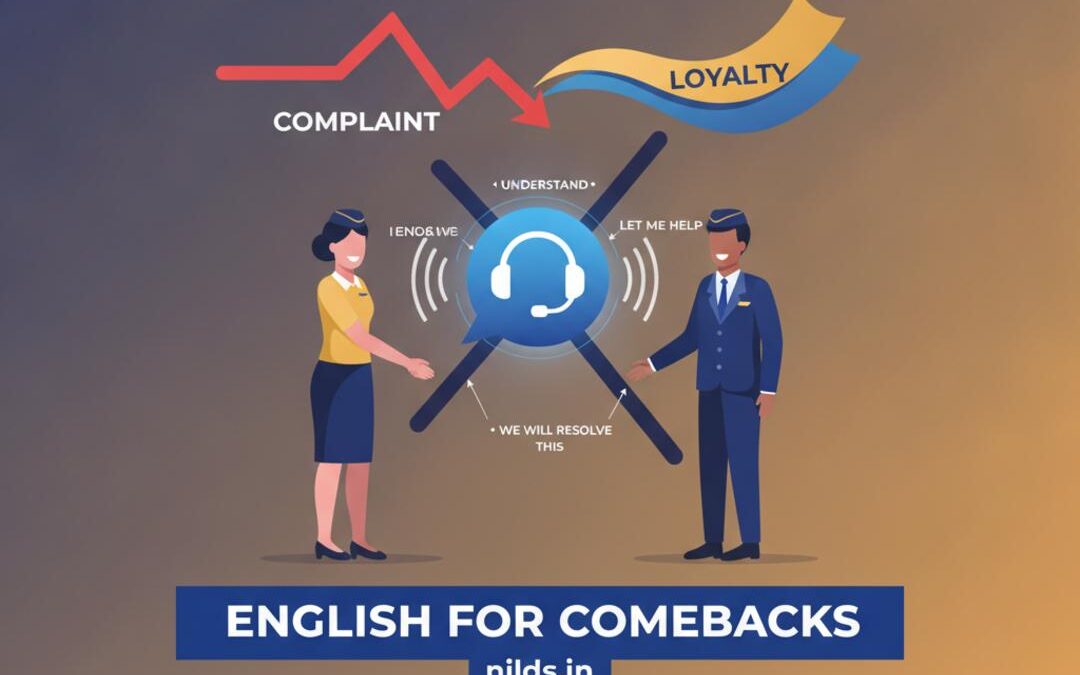
Aviation English
Aviation English for Service Recovery Teams: Turning Complaints into Loyalty in 2026
The difference between a customer who never returns and one who becomes a brand advocate often comes down to one skill: aviation English for service recovery teams.
Estimated reading time: 8 minutes
Key Takeaways
- Well-handled complaints create more loyalty than problem-free experiences.
- Aviation English is about tone, pacing, and emotional intelligence under pressure.
- Recovery has three stages: listen with empathy, own the problem, resolve with a comeback.
- A guest whose complaint is solved in under five minutes with empathy is 70% more likely to fly again.
- Recovery English training must be continuous across the whole guest experience team.
Table of Contents
In 2026, airline competition is no longer just about routes or fares. It is about how quickly and gracefully your team recovers when something goes wrong. A delayed flight, a lost bag, or a rude gate agent can destroy years of loyalty in seconds. The difference between a customer who never returns and one who becomes a brand advocate often comes down to one skill: aviation English for service recovery teams. When front-line staff master complaint handling English for airline staff, they turn frustration into trust.
The Real Cost of Poor Service Recovery Communication
Service failures are inevitable. How you communicate them is not. Research shows that customers who experience a well-handled complaint are more loyal than those who never had a problem at all. But that only happens when your team can listen, empathize, and resolve in clear, calm English. Without airline guest experience English training, agents may sound defensive, scripted, or confused. That escalates anger and pushes guests to social media or competitors.
Why Standard English Isn’t Enough
Aviation English is not just vocabulary. It is tone, pacing, and emotional intelligence under pressure. A guest yelling about a missed connection does not want perfect grammar. They want to feel heard. De-escalation English for aviation staff teaches phrases that acknowledge pain without admitting fault, offer solutions without overpromising, and guide the conversation toward a comeback. This is the core of turning complaints into loyalty English aviation.
How English Training Builds Comeback Skills
A strong aviation customer service English course focuses on three recovery stages: listen, own, and resolve.
1. Listen with Empathy
Agents learn to say, “I understand why you’re upset. Let me help.” Instead of “That’s not our policy.” Spoken English for airline customer experience teams must include active listening cues that show guests they matter.
2. Own the Problem
Taking ownership means using “I” and “we” language. “I will personally check your booking” beats “You need to call another department.” Professional communication for airline front-line teams turns blame into responsibility.
3. Resolve with a Comeback
A comeback is not just a refund. It is a memorable recovery. Agents trained in airline service failure recovery communication offer choices, follow up, and thank guests for their patience. That final touch transforms a complaint into a loyalty story.
Aviation English is not about being perfect — it is about being present, clear, and human in the language your guests understand.
The 2026 Advantage: Interview and On-the-Job English
Airlines now screen for recovery English during hiring. Airline guest experience job interview English often includes role-plays where candidates must calm an angry passenger. Without practice, even experienced agents freeze. Hospitality English for guest experience staff prepares them for these moments. NILDS aviation English training uses real airline scenarios, from overbooked flights to onboard medical diversions, so teams respond naturally.
Building a Recovery Culture
One trained agent is not enough. The entire guest experience team needs consistent language. Aviation guest relations English training 2026 should be ongoing, not a one-time workshop. Weekly huddles, peer feedback, and recorded simulations keep skills sharp. When everyone speaks the same recovery language, guests feel a seamless brand promise.
Turning Complaints into Loyalty: A Measurable ROI
Loyalty is not a soft metric. It shows up in repeat bookings, referrals, and lower acquisition costs. A guest whose complaint is solved in under five minutes with genuine empathy is 70% more likely to fly again. That is the power of aviation English for service recovery teams. It is not about being perfect. It is about being present, clear, and human in the language your guests understand.
Repeat bookings. Guests who feel heard return for their next trip.
Referrals. Recovered guests recommend the airline to others.
Lower acquisition costs. Loyal customers reduce the spend needed to win new ones.
Start with the Front Line
Gate agents, call center staff, and flight attendants are your recovery warriors. Invest in their spoken English for airline customer experience teams. Role-play angry passengers. Practice apologizing without blaming. Celebrate successful comebacks in team meetings. Over time, complaint handling becomes a loyalty engine.
In 2026, the airlines that win are not the ones with zero delays. They are the ones whose teams can say the right words at the worst moments. Master that, and every complaint becomes a chance to build a lifelong customer. That is the quiet superpower of aviation English for service recovery teams.
Build the Skills for Your Global Career
Develop the communication, confidence and professional skills needed to become career-ready for aviation, hospitality and the global workplace.
Learn Today. Lead Tomorrow.