
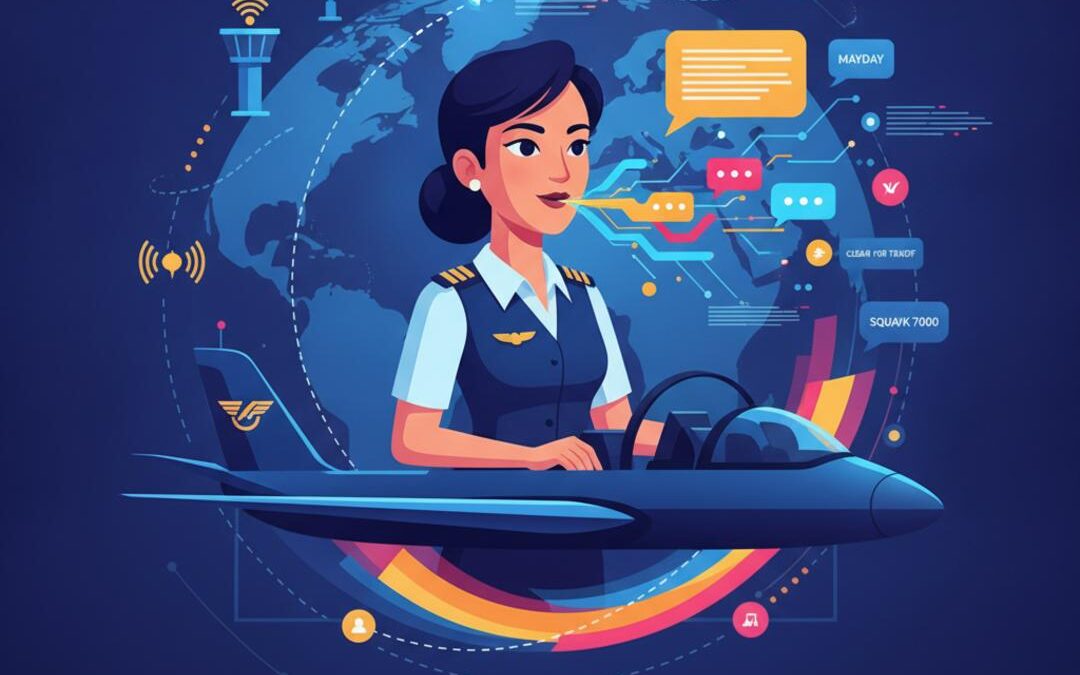
Aviation English
Aviation English for CPL Students and Cadet Pilot Programs in 2026
The runway to a commercial pilot career is paved with technical knowledge, flight hours, and one often-overlooked skill: aviation English.
Estimated reading time: 8 minutes
Key Takeaways
- English proficiency is a licensing requirement for CPL students in India, not just a bonus.
- DGCA and ICAO require at least Level 4 operational proficiency for international flying.
- Cadet pilot programs use English as a hidden selection filter in group discussions and interviews.
- Immersion, pressure speaking, vocabulary, and accent training build aviation English skills.
- Airlines in 2026 reward pilots who communicate decisively, calmly, and accurately.
Table of Contents
The runway to a commercial pilot career is paved with technical knowledge, flight hours, and one often-overlooked skill: aviation English. For CPL students and cadet program candidates in India, English proficiency is not just a bonus—it is a licensing requirement and a career differentiator. Airlines in 2026 demand pilots who can communicate flawlessly under pressure, and your English skills will be tested long before you enter a cockpit.
Why Aviation English Matters More Than Ever
Aviation English is the global language of the skies. The International Civil Aviation Organization (ICAO) mandates English language proficiency for all pilots flying internationally. In India, the DGCA pilot English requirement aligns with ICAO standards, meaning you must demonstrate at least Level 4 operational proficiency. But passing a test is only the beginning.
Airlines use English in every phase of operations: pre-flight briefings, ATC communications, crew resource management, and emergency scenarios. Miscommunication has contributed to real accidents. That is why cadet pilot programs and airlines screen candidates rigorously for spoken English, comprehension, and the ability to think in English during high-stress situations.
Your English skills will be tested long before you enter a cockpit—and miscommunication has contributed to real accidents.
The DGCA and ICAO English Proficiency Framework
The DGCA requires pilots to hold a valid English Language Proficiency (ELP) endorsement. This involves a test covering pronunciation, structure, vocabulary, fluency, comprehension, and interactions. You need to score at least Level 4 to operate internationally. Levels 5 and 6 offer longer validity and greater career flexibility.
For CPL students, this means English training cannot be an afterthought. It must be integrated into your ground school and flight training from day one. Cadet program candidates face additional hurdles: group discussions, personal interviews, and simulator assessments—all conducted in English.
How CPL Students Can Build Aviation English Skills
Immerse Yourself in Aviation English Daily. Listen to live ATC feeds, watch aviation documentaries, and read pilot forums to build reflexes.
Practice Speaking Under Pressure. Join mock interviews and role-play ATC exchanges to communicate when things go wrong.
Master Aviation Vocabulary and Idioms. Build a glossary—from “mayday” to “squawk”—and use it in sentences, not just flashcards.
Improve Comprehension of Accents. Train your ear with global ATC recordings to handle international crews and controllers.
1. Immerse Yourself in Aviation English Daily
Listen to live ATC feeds, watch aviation documentaries, and read pilot forums. Focus on standard phraseology as well as plain English used in non-routine situations. NILDS aviation English training programs simulate real-world radio calls and emergency scenarios to build reflexes.
2. Practice Speaking Under Pressure
Airlines test your ability to communicate when things go wrong. Join mock interviews, role-play ATC exchanges, and practice explaining technical concepts in simple English. Record yourself and review for clarity, pace, and filler words.
3. Master Aviation Vocabulary and Idioms
From “mayday” to “squawk,” aviation has a distinct lexicon. But plain English matters too—describing weather, mechanical issues, or passenger behavior. Build a glossary and use it in sentences, not just flashcards.
4. Improve Comprehension of Accents
You will fly with international crews and speak to controllers with varied accents. Train your ear with global ATC recordings. This is a core part of pilot communication skills 2026 candidates are expected to have.
Cadet Pilot Program English: The Hidden Selection Filter
Cadet pilot programs in India and abroad are highly competitive. English is often the first filter. Group exercises test your ability to lead, negotiate, and present ideas clearly. Interviews probe your motivation and situational judgment. If you hesitate or struggle to express yourself, you will be overlooked—even with strong math and physics scores.
English for commercial pilot training includes technical report writing, checklist reading, and crew briefings. Cadet programs look for candidates who can switch between casual conversation and precise operational language.
Building a 2026-Ready English Strategy
Start early. Take an aviation English course for CPL students that covers ICAO descriptors. Practice with native and non-native speakers. Read aviation safety reports and summarize them aloud. Simulate radio calls with a partner. Most importantly, treat English as a core flight skill, not a language test.
NILDS aviation English training is designed for aspiring pilots who want to clear DGCA and airline selection with confidence. The program blends ICAO English for pilots with interview preparation, group discussion practice, and real-time communication drills.
Your Career Takes Off With Clear Communication
Aviation English is not a hurdle to clear once—it is a lifelong professional asset. Airlines in 2026 will reward pilots who can communicate decisively, calmly, and accurately. Whether you are a CPL student or a cadet program candidate, mastering spoken English for pilot cadets is the smartest investment you can make. Start your aviation English training today and position yourself as the pilot every airline wants to hire.
Build the Skills for Your Global Career
Develop the communication, confidence and professional skills needed to become career-ready for aviation, hospitality and the global workplace.
Learn Today. Lead Tomorrow.