
Aviation English
Aviation English for Line Maintenance Teams: Why Clear Communication Prevents AOG Disasters in 2026
In aviation, a single misunderstood word can cost an airline hundreds of thousands of dollars — yet in 2026, language barriers remain a hidden risk on the apron.
Estimated reading time: 6 minutes
Key Takeaways
- When an aircraft on ground (AOG) situation occurs, flawless communication between engineering teams, line maintenance control, and flight deck crews becomes critical.
- Misheard defect descriptions, unclear MEL references, and vague handovers can delay rectification by hours.
- Cross-shift handover is where many AOG events begin — structured protocols reduce ambiguity and ensure continuity.
- Training must go beyond generic business English to simulate real AOG scenarios, radio calls, and time-pressured briefings.
- In 2026, clear English is not just a soft skill — it is a technical requirement that protects fleets, schedules, and reputations.
Table of Contents
In aviation, a single misunderstood word can cost an airline hundreds of thousands of dollars. When an aircraft on ground (AOG) situation occurs, the pressure intensifies. Engineering teams, line maintenance control, and flight deck crews must communicate flawlessly. Yet, in 2026, language barriers remain a hidden risk. Aviation English for line maintenance teams is no longer a nice-to-have—it is a safety and operational imperative.
The High Cost of Miscommunication on the Apron
Aircraft on ground AOG communication English is critical when an aircraft is stranded. A misheard defect description, an unclear MEL (Minimum Equipment List) reference, or a vague handover can delay rectification by hours. For airline engineering staff, technical English proficiency directly impacts turnaround time. When a pilot reports a fault, the line maintenance control team must interpret it accurately, relay it to the hangar, and coordinate a fix. If any link in that chain weakens, the aircraft stays on the ground.
Defect Reporting: From Flight Deck to Maintenance
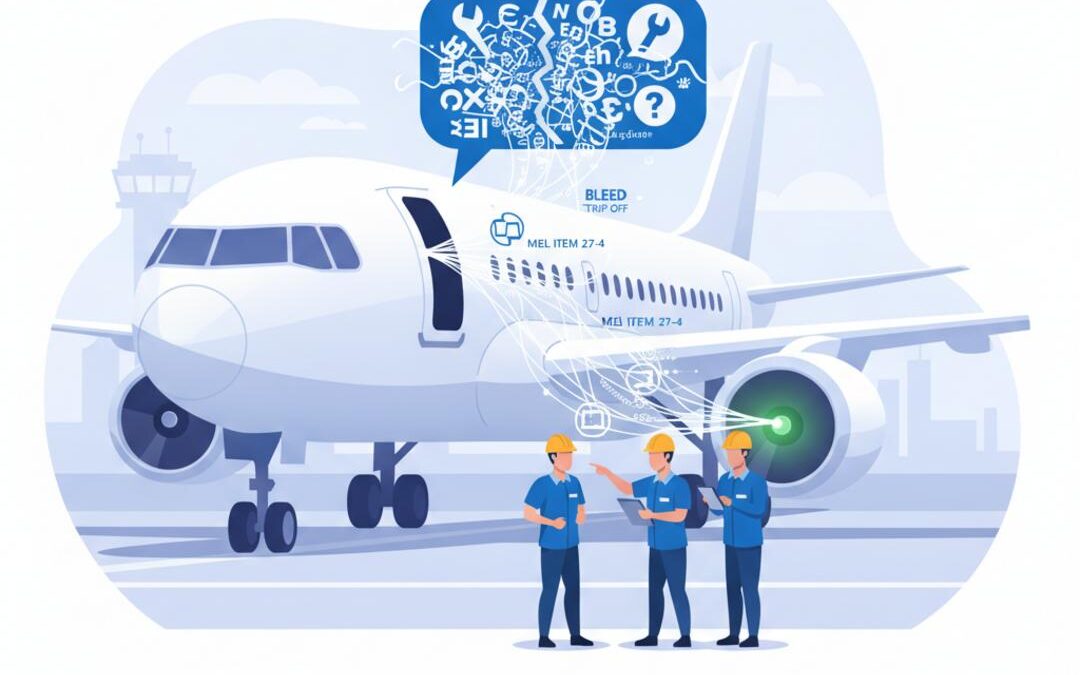
English for aircraft defect reporting is a core skill. Pilots often describe issues in rapid, colloquial terms. Engineers must translate these into precise technical actions. Consider a pilot reporting a “bleed trip.” Without clear spoken English for aviation engineers, a technician might misdiagnose the system. Maintenance control centre communication skills ensure that the defect is logged, prioritised, and assigned correctly. In 2026, with tighter schedules and older fleets, every minute counts.
When every link in the communication chain matters, a single misunderstood word on the apron can keep an aircraft on the ground for hours — clear aviation English is the difference between a quick fix and a costly AOG.
Cross-Shift Handover: The Silent AOG Trigger
Cross-shift handover communication aviation is where many AOG events begin. A tired engineer finishing a night shift may verbally pass on a minor defect. If that message is unclear, the next shift may overlook it. MEL and defect rectification English aviation training teaches structured handover protocols: what was found, what was done, what remains open. This reduces ambiguity and ensures continuity. Without it, an aircraft can be released with unresolved issues—or held unnecessarily.
Standardising Technical Documentation English
Aviation technical documentation English course content must cover reading and writing. Engineers frequently consult manuals, service bulletins, and logbooks. Misreading a torque value or a part number can lead to incorrect repairs. Technical English for aviation engineering teams includes comprehension of standard phraseology and abbreviations. When documentation is clear, rectification is faster and safer.
Defect reporting. English for aircraft defect reporting translates colloquial pilot reports into precise technical actions.
Cross-shift handover. Structured protocols covering what was found, done, and left open prevent silent AOG triggers.
Technical documentation. Reading and writing skills prevent misread torque values and part numbers in manuals and logbooks.
Scenario-based training. Simulating rushed pilot reports and time-pressured handovers builds real operational confidence.
Career advancement. Aviation engineering job interview English helps strong communicators become the go-to problem solvers.
Training That Targets Real Scenarios
Airline engineering and maintenance English training 2026 must go beyond generic business English. It should simulate AOG scenarios: a pilot’s rushed report, a control centre’s clarification call, a handover under time pressure. Line maintenance control English training should include role-plays between hangar, apron, and flight deck. Spoken English for aviation engineers improves confidence during radio calls and face-to-face briefings. Aviation engineering job interview English also matters—strong communicators advance faster and become the go-to problem solvers.
The NILDS Advantage
NILDS aviation English training is built for operational reality. It focuses on the exact phrases and structures needed for defect reporting, MEL application, and cross-shift handover. By integrating aviation English for airline engineering staff into daily workflows, airlines reduce miscommunication risk. The result is fewer AOG groundings, faster rectification, and safer operations. In 2026, clear English is not just a soft skill—it is a technical requirement. Investing in it protects your fleet, your schedule, and your reputation.
Build the Skills for Your Global Career
Develop the communication, confidence and professional skills needed to become career-ready for aviation, hospitality and the global workplace.
Learn Today. Lead Tomorrow.